When Popular Publications launched The Spider in October 1933, the hero-pulp market was already filling up fast. The Shadow Magazine had been on newsstands for two years; The Phantom Detective had arrived in February, and Doc Savage Magazine and Nick Carter Magazine the next month.
Popular’s answer was not another clean-lined champion of justice; it pushed the boundaries those pulps had carefully respected, and it created something darker, more violent, and more morally fevered than anything its contemporaries were willing to publish.
Initially penned by R.T.M. Scott, The Spider’s exploits began as run-of-the-mill battles against typical racketeers and criminal masterminds. Pretty much what readers of the pulps were familiar with.
But that changed as quickly as the author’s name on the magazine’s cover. Beginning with the third number (December 1933), Grant Stockbridge was credited as the author, and The Spider’s adventures began to take on mythic proportions. The Spider changed from a mere nickname for detective Richard Wentworth into a shocking, caped-and-fanged wild man that Wentworth transformed into for his war on crime.
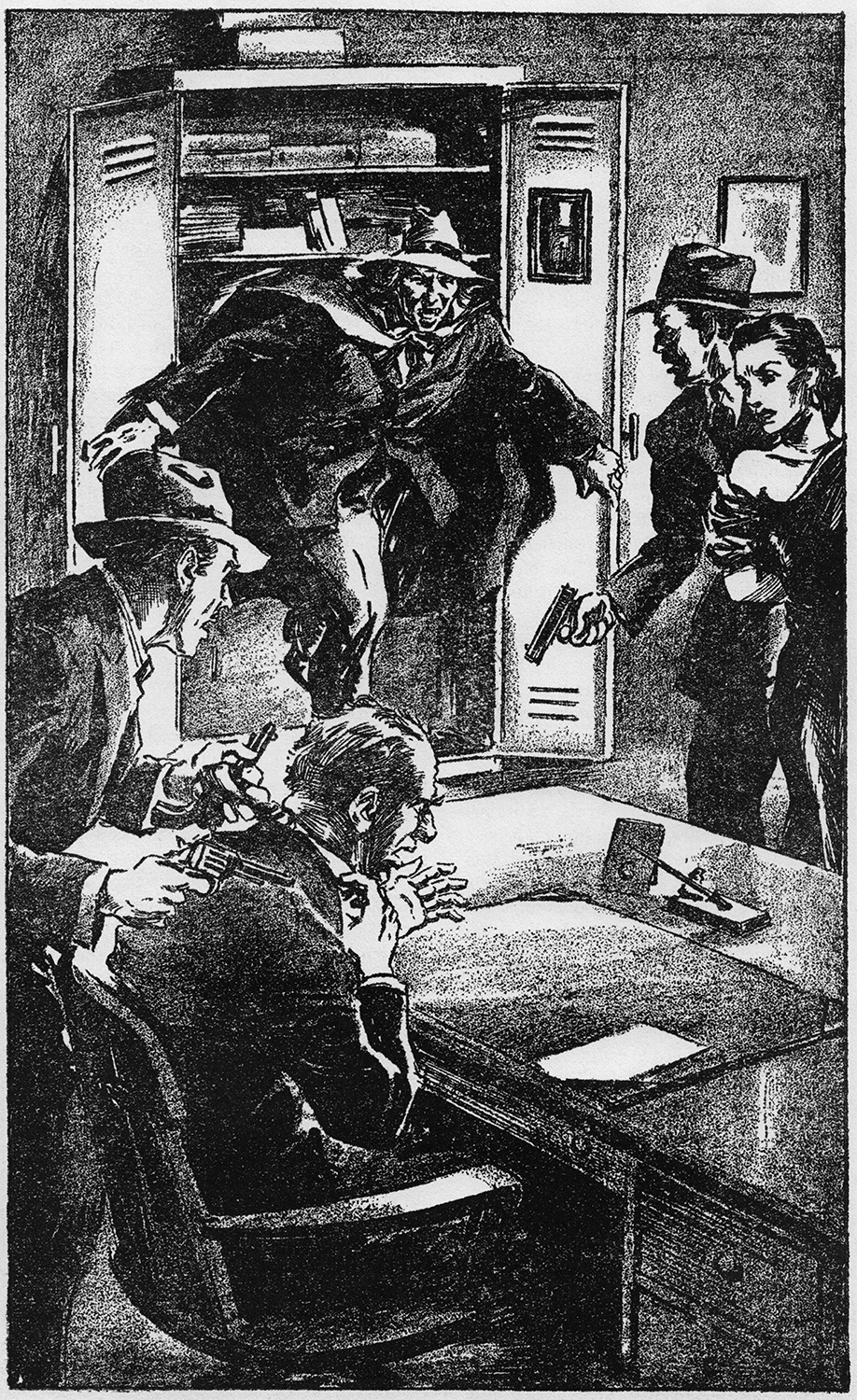 Those changes came when Norvell W. Page took the reins as author behind the house name. Page wrote 93 of the series’ 118 novels, and he shaped the character as thoroughly as Walter B. Gibson shaped The Shadow.
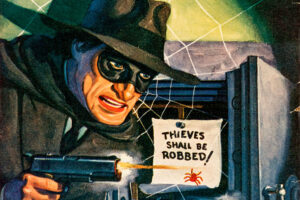
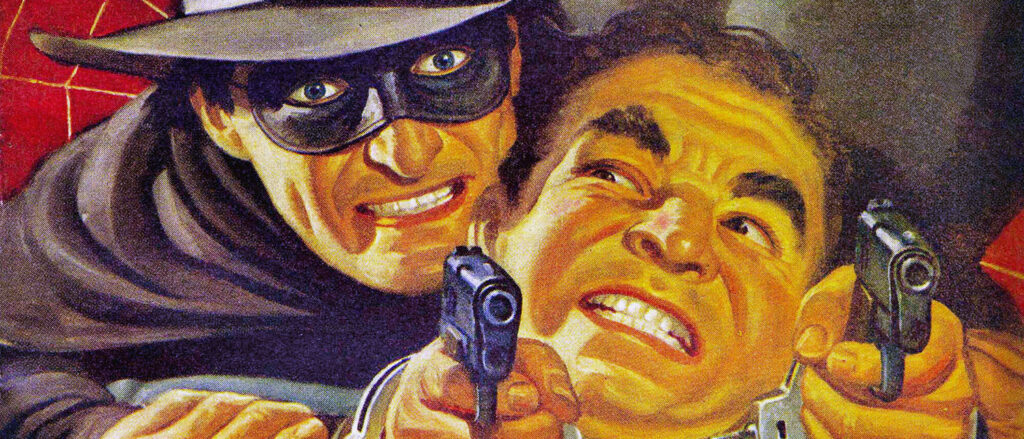
Page’s Spider was no reluctant vigilante. He killed, freely and often, and he gloried in it in ways that would have been unthinkable in a Street & Smith hero pulp. The Spider branded the foreheads of the dead with his crimson spider seal, leaving no ambiguity about who had dealt justice. The late pulp historian Robert Sampson wrote of Popular’s pulps that they were “jammed with non-stop violence, like the fever dream of a homicidal maniac.” He did not mean it as a complaint.
Emile C. Tepperman, Wayne Rogers, and a few others also contributed adventures under the Stockbridge house name, but none deviated from Page’s template. Restraint was not a concern for The Spider or Popular Publications.
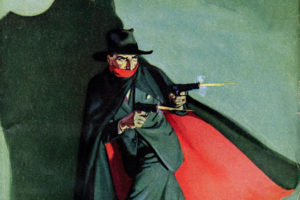
Beneath The Spider’s mask was Richard Wentworth, a wealthy man-about-town, who was assisted by his devoted companion, Nita van Sloan; his Indian servant, Ram Singh; and his chauffeur, Ronald Jackson. Commissioner Stanley Kirkpatrick, who was Wentworth’s closest friend, spent most of the series trying to arrest him, a tension the novels milked for everything it was worth. To become The Spider, Wentworth applied a hunchbacked disguise so bizarre that it rarely found its way onto the covers.
The Spider ran from October 1933 through December 1943, a decade of relentless mayhem. The Spider also starred in a short-lived, half-hour radio drama broadcast from St. Louis in 1935. And, the character appeared in two Columbia serials — The Spider’s Web (1938) and The Spider Returns (1941) — though the film versions softened the character considerably and clad him in a spider-web costume. Page himself stepped away from the series in 1943, and the magazine folded the same year. In late 1969, Berkley Medallion began reprinting The Spider novels in paperback, with hopes of duplicating the success of Bantam’s Doc Savage line. The Spider reprints have appeared each decade since, though often only with a handful of editions. In 2018, Steeger Books began publishing trade-paperback editions of the series.
The Spider never entered mainstream popular memory the way The Shadow and Doc Savage did, and that may be a reflection of the character’s own nature. A hero who kills with enthusiasm and leaves a calling card on the corpses was always going to have a narrower audience than one who hands criminals over to justice. But for readers who found The Shadow too restrained and Doc Savage too principled, the Master of Men offered something the others didn’t: a pulp hero who operated entirely on his own terms, consequences be damned.
Learn more about The Spider
- The Spider links
- Here is our curated collection of links covering The Spider magazine, including fan sites, e-texts of the original novels, cover art galleries, film serial listings, and resources on the artists and authors behind the Master of Men.
- When the real Spider appeared
- Only seven covers out of the whole run of The Spider magazine showed the character’s true hideous appearance.
- Pulp Tales: The Spider: Master of Men!
- Listen to Chris Kalb, Gary Phillips, and Will Murray as they celebrate 90 years of The Spider. It’s an episode of ThePulp.Net’s Pulp Tales podcast, recorded at PulpFest 2023.