In 1923, Adventure editor Arthur Sullivant Hoffman asked 116 writers how they built a yarn. Here’s how Captain Dingle, Arthur O. Friel, and Talbot Mundy answered.
Having been a magazine editor for 20 years (Adventure, Romance, Delineator, Smart Set, Transatlantic Tales, Watson’s, Chautauquan), I had become more and more rebellious against present methods of teaching fiction writing, for year by year their fruits poured across my desk by the thousands — stories often technically correct but machine-like, artificial, lacking in real individuality. American fiction as a whole is characterized by this result of the curse of formula and, until that curse is removed, American fiction can never attain the place to which native ability entitles it.
Editor’s note
This article is excerpted from Hoffman’s Fiction Writers on Fiction Writing (1923).
So I wrote a book in protest and in the hope that it might, to some degree, serve those who were willing to turn from formalism to individual expression. if only they could find some small guideposts along the way. In Fundamentals of Fiction Writing, I tried to give them, instead of rules, an understanding of the facts of human nature upon which art and its rules must be based, so that they might see their own way and walk upon their own feet. The simplest and most effective way of proving this was to show them that the writers who had actually succeeded did not blindly follow general rules but chose among them each according to his own needs and bent, and that what was one writer’s meat was another writer’s poison.
So, to prove that rules must be subject to individuality, I sent out a questionnaire to writers, planning to use the answers as an appendix to Fundamentals. Some questions were added to gather further data on facts of human nature, and still others were suggested by writers (William Ashley Anderson and L. Patrick Greene) with whom I consulted, answers to these last questions being sought as data of interest to writers in general.
[Editor’s note: Out of 116 fictioneers that Hoffman polled, we’ve selected three who contributed regularly to Hoffman’s Adventure and numerous other pulp magazines: Arthur O. Friel (1885-1959), Captain A.E. Dingle (1879-1947), who also wrote under the name Sinbad, and Talbot Mundy (1879-1940).]I. The genesis of a story
What is the genesis of a story with you — does it grow from an incident, a character, a trait of character, a situation, setting, a title, or what? That is, what do you mean by an idea for a story?
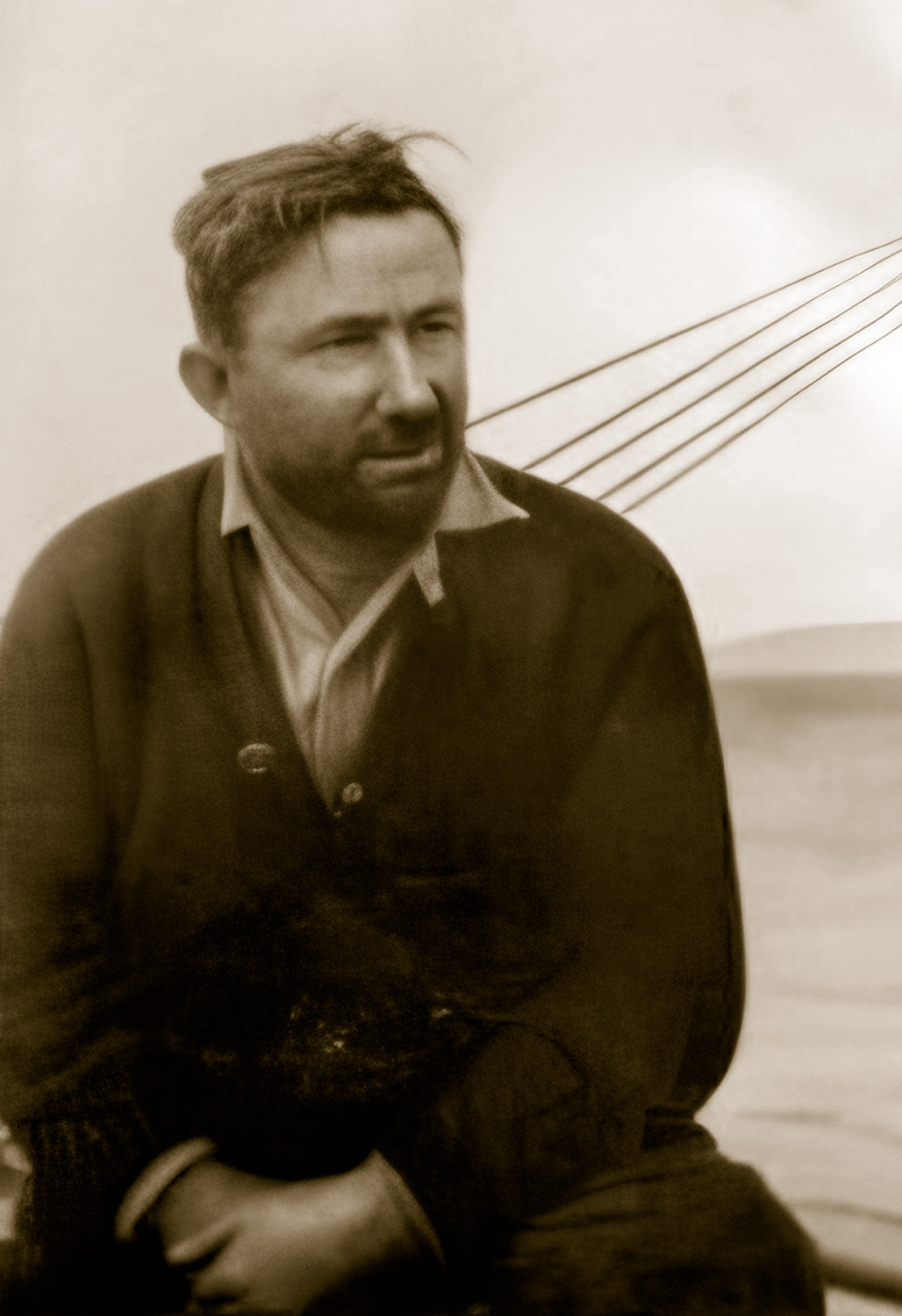
Captain A.E. Dingle: In general, my story comes from a vision of a character and a situation. Sometimes only the situation. Then I make a character to fit it — usually out of material I know.
Arthur O. Friel: It differs. It may be any one of these things. Sometimes hits me suddenly, like an electric spark forming contact, and the wheels begin to buzz. If I keep them buzzing, I have a story.
Talbot Mundy: With me, the genesis of a story is too often the need for money; or at any rate, the need for money generally has too much to do with it. I disagree totally from the accepted theory that it does a writer good to be “hard up.” It is true that I wrote some of my best stories when I was frightfully “broke” — The Soul of a Regiment, for instance; but the idea of selling that story never entered into the conception or construction of it; had nothing to do with it, in fact. It was an idea and an incident that took hold of me and thrilled me while I wrote it. It was based on a tale that my father told me one Sunday morning at breakfast when I was about 8 years old. He told it to me all wrong, but contrived to put across the spirit of the thing, and it seems that that part stuck.
Ideas, I am afraid, are no good unless pinned down in the very beginning to a character and one main incident. I can live in a world of ideas; in fact, I generally do, dreaming along without much reference to “hard” facts. I see pretty clearly the necessity to make ideas concrete by turning them into persons, things, and incidents. A plot is otherwise a mere conundrum without much interest to the reader, however appealing to the writer it may be. Thus, an idea for a story (in my case) may be an incident, a trait of character, a situation, setting, title, or almost anything; and the temptation, which I fall for much too often, is to go dancing along with the idea, letting it will-o’-the-wisp me all over the place. Whereas the true process is to pin that idea down and make it so concrete that the reader doesn’t recognize it as an idea, but does recognize a sort of familiar friend — concrete as a sidewalk. This is a counsel of perfection; but it’s the nearest I can get, after a dozen years of trying, to an answer to your question. Be concrete. Get away from the abstract by making it concrete. With that proviso, anything whatever is an idea for a story.
II. Planning, drafting, and revision
Do you map it out in advance, or do you start with, say, a character or situation, and let the story tell itself as you write? Do you write it in pieces to be joined together, or straightaway as a whole? Is the ending clearly in mind when you begin? To what extent do you revise?
Dingle: The story is pictured as a whole, with one ending clearly in view before a word is written. I do not — can not — plan a story or map it out; it has to write itself, or it fails; and sometimes the ending I saw first has to give place to one more fitting to the developed story. I do not revise, except to correct noted errors of spelling and grammar (which are apt to slip anyhow, since I know damn little about ’em). Whenever I have revised a story it has proved a failure. The stuff, such as it is, must come spontaneously.
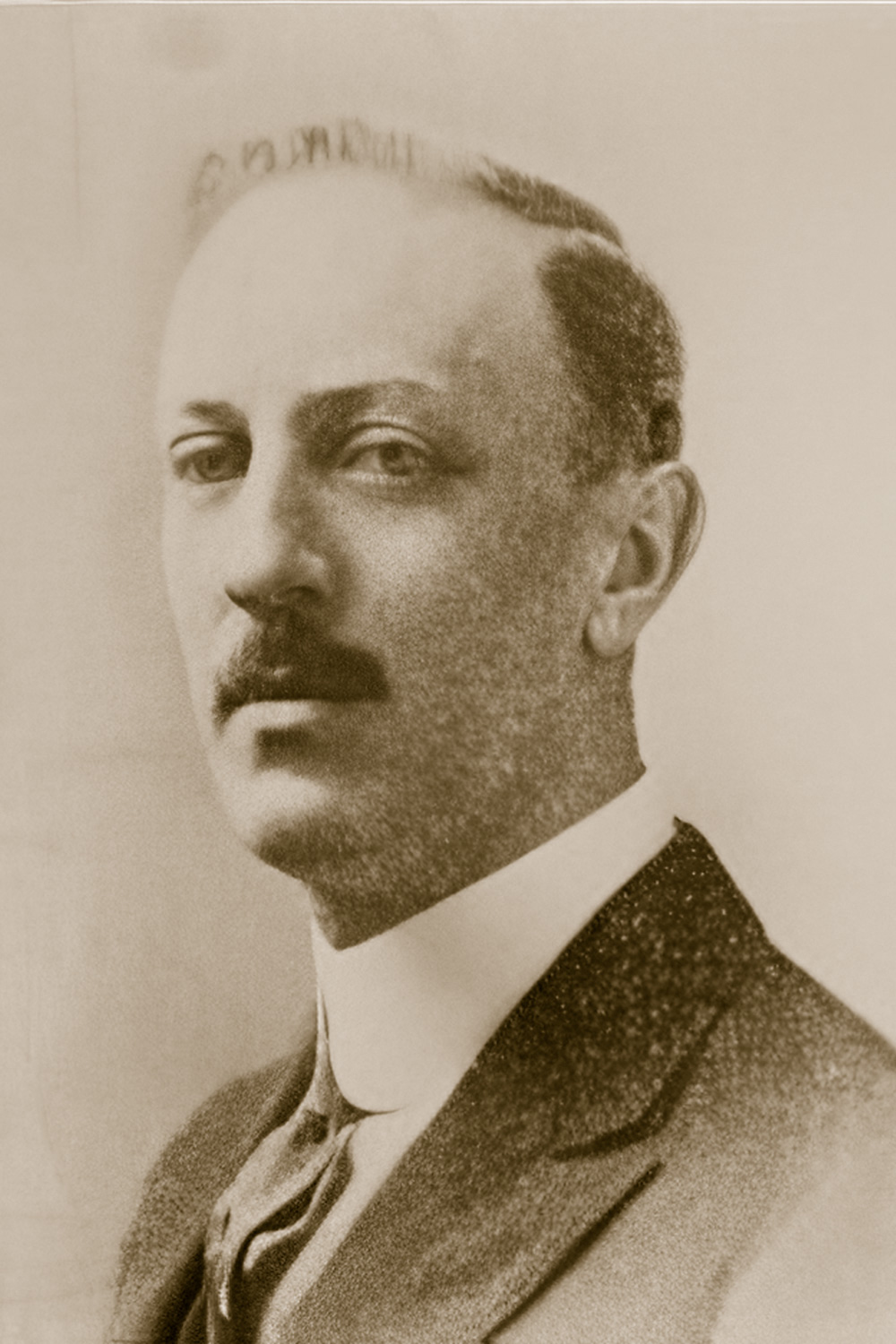
Friel: I let the story tell itself. Straightaway as a whole. Ending not clearly in mind. Revise comparatively little. Sometimes I rewrite a section, but usually not. My main revision is with the idea of compression and compactness.
In writing, I don’t lay out my story and get it all nicely framed up before starting to write. I start with a general idea which comes to me from God-knows-where, and soon I’m marching along with my characters without any very clear idea of where we’re all going to wind up. We get into swamps and cut our way through the bush and clamber up onto a hill and maybe find something on the other side; one thing leads to another, and eventually we make a good finish. Then we review our course, see where we went up a box-canyon which got us nowhere, and delete that place from the record of our trip; that’s our “revision.”
This, of course, is all wrong from the viewpoint of folks who love to systematize everything; but it’s my way of traveling through a story, and I get there just the same. I have tried, on a number of occasions in the past, to make my characters and events fit a more-or-less definite idea of mine as to what they were to do, but it didn’t work; they just took matters into their own hands and did all kinds of things I never meant them to, and all I could do was to trail along; and, darn ’em, they made a far better yarn of it than I’d ever have made if I’d clubbed them into submission. So now I’ve learned to let them do as they will, after I’ve brought them together in a certain place and started them on their way.
Mundy: I hardly ever map out in advance. My right hand hardly ever knows what the left is doing. But I’m not convinced that this is good. Just as an artist usually maps out his canvas in advance, without actually seeing the finished picture, so I believe that it will usually pay the writer to fix at least certain definite landmarks for his guidance.
Order is heaven’s first law.
I write the story straightaway as a whole. The end is never in view (or almost never) when I first begin. But I am beginning to believe that (for me at any rate) that is an important formula — visualize the end of the story first. It is certainly a prime essential of drama to provide a clear view of the main character just at the close; and I think that principle underlies story-writing. The writer should have in mind throughout a clear view of his main character as he will be at the story’s end. The point had not occurred to me until I commenced this answer; but the more I study it the more strongly it convinces. That, and be concrete all through the piece.
III. Imagination and the senses
When you read a story, to what extent does your imagination reproduce the story-world of the author — do you actually see in your imagination all the characters, action, and setting just as if you were looking at an actual scene? Do you actually hear all sounds described, mentioned, and inferred, just as if they were real sounds? Do you taste the flavors in a story, so really that your mouth literally waters to a pleasant one? How real does your imagination make the smells in a story you read? Does your imagination reproduce the sense of touch — of rough or smooth contact, hard or gentle impact or pressure, etc.? Does your imagination make you feel actual physical pain corresponding, though in a slighter degree, to pain presented in a story? Of course you get an intelligent idea from any such mention, but in which of the above cases does your imagination produce the same results on your senses as do the actual stimuli themselves?
If you can really “see things with your eyes shut,” what limitations? Are the pictures you see colored or more in black and white? Are details distinct or blurred?
If you studied geometry, did it give you more trouble than other mathematics?
Is your response limited to the exact degree to which the author describes and makes vivid, or will the mere concept set you to reproducing just as vividly?
Do you have stock pictures for, say, a village church or a cowboy, or does each case produce its individual vision?
Is there any difference in behavior of your imagination when you are reading stories and when writing them?
Have you ever considered these matters as “tools of your trade”? If so, to what extent and how do you use them?
Dingle: Depends, of course, on the artistry of the author in that particular story. Some stories read to me like the monotonous dirge of a praying revivalist’s convert. But when the story is well written and is a story after mine own heart, I can generally see, taste, smell, feel with the author, though I never recall feeling physical pain. Of the senses, I think sense of smell gets to me most vividly. (No, that isn’t any wallop at anybody’s stuff. My own stinks sometimes.)
I have to “see” my own work, though not necessarily with eyes shut. When I visualize a story, it is like seeing a fleet of ships coming out of a fog. When the fog clears, the bell rings for “Full Ahead.”
I never had a chance to study anything deeply. To pass any of my nautical exams, I was simply crammed with rules and never learned the roots. So far as I remember, of any studies I suffered at school, what we called plain ordinary “sums” gave me as hard a hammering as anything. I never could learn to do more than add and subtract and blunder through division. Salt hoss and hardtack and rope-ends constituted my curriculum after the age of 14-and-a-half.
Sometimes an author’s mere phrase will give me a clear picture, but not often. I can’t recall a writer of recent date who can do that for me.
I have a fresh vision, usually, for each picture I form myself, except where I am using a character or a scene over and over again, as in a series. I mean, I don’t see any building as a mere pattern, nor any man as a type altogether.
Oh, yes! My own imagination works like a pre-war non-union artisan when I am writing: smoothly, without strikes, and never kicking at a bit of overtime. When reading, unless the stuff grips extra hard, the imagination is like one of the post-war scum who never work except to fight up to the pay window, then strike till next pay-day.
No, I don’t think so. Perhaps I ought.
Friel: My imagination does not reproduce any of these sense impressions, or pain. If the writer has made these things vivid, they register strongly, but I do not actually see, hear, and smell them as in real life. Didn’t study geometry. Am limited virtually, though not actually, to the writer’s portrayal. No stock pictures. Reading vs. writing? Yes. When writing a story, I live it. Have not considered these as tools of my trade.
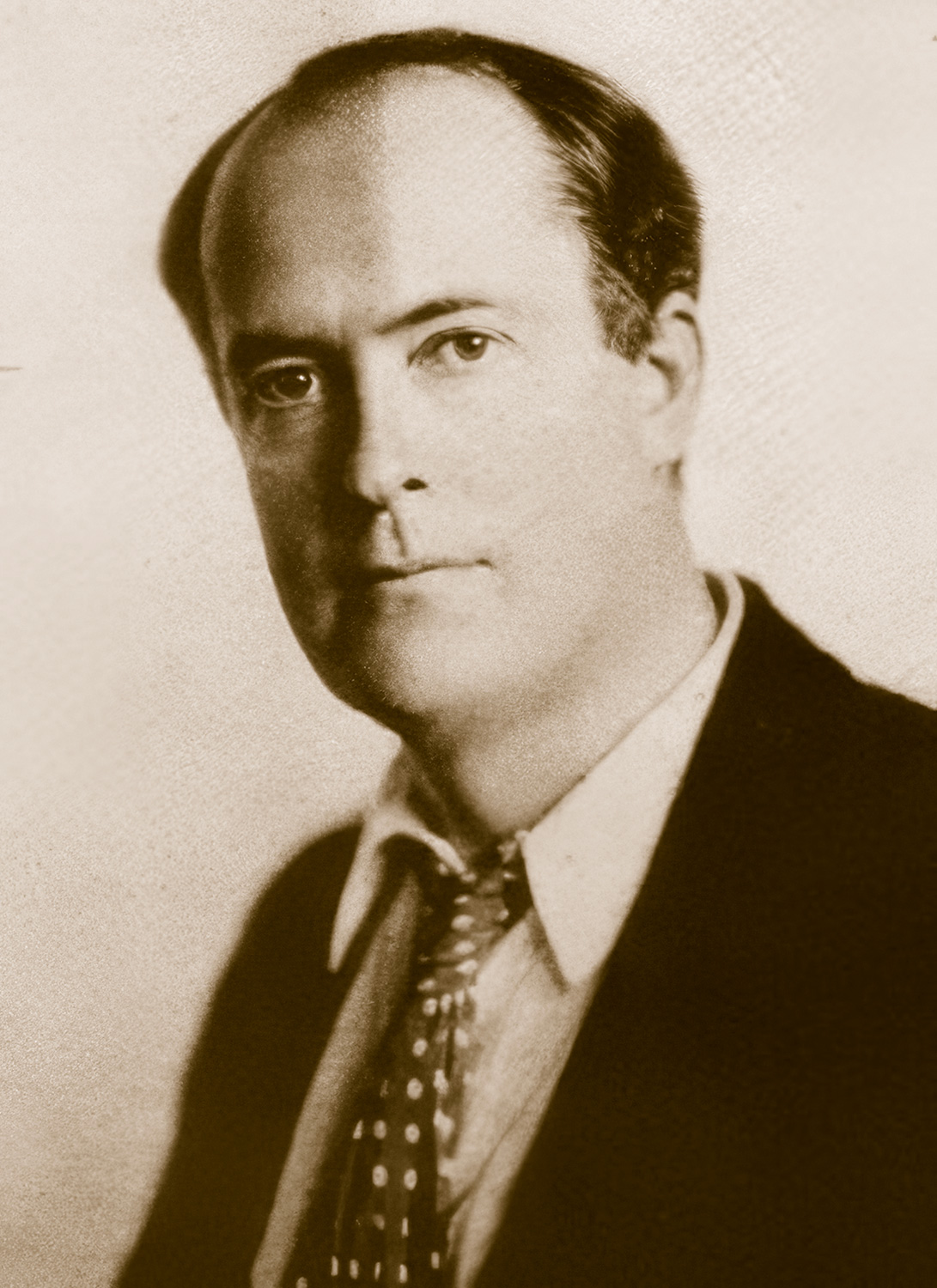
Mundy: If I pick up a book, say, on India, and provided the book is sufficiently well written not to “get my goat,” I am in India instantly. I see, smell, hear and taste India. Sometimes I almost touch it. The same with any other country or place. India merely serves as an illustration. I have to be brought back to my surroundings with a wrench.
Sound is perhaps the least real of the sensations. I get the effect of the sound without the sound itself. The louder the sound, the less real, I rather think. For instance, if a gun goes off I don’t jump out of my skin, and I don’t think I hear the report — or, if so, I rather see than hear it. Colors are absolutely real, although rather more beautiful than in actual experience.
This is a very difficult question to answer, however. The world of imagination and ideas seems to me to be a separate world in which we experience all the sensations above referred to, but experience them differently. The sting — the element of personal suffering — to use the Christian formula, the cross — seems to be missing in this world of imagination; so that, although the cross and its consequences — a strong smell and its discomfort, pain and its distress — may all be present in the story, they are seen objectively and have practically no physical reaction except that of conscious pleasure.
On the other hand, ideas, emotions, contrasts between right and wrong do have a pronounced physical effect. I frequently sweat or grow angry or get prodigiously excited while reading — but always because of an idea that is concretely presented.
Perhaps I can put it best this way: Suppose that we torture the heroine. The most blood-curdling description of her agonies would probably excite my curiosity and might perhaps tickle a sadistic vein, but would certainly not cause me physical distress nor even mental disturbance. But the question whether she shall be tortured or not — the right and the wrong of it — the low-down arguments used on the one side, the high standards raised on the other, would arouse me almost to frenzy, and the blood would go coursing through my veins twice as fast as usual.
I don’t have to shut my eyes to “see things.” I see them more easily with eyes wide open. Possibly because I am short-sighted, the imaginary things that I see in that way are often more “real” than the real world. The pictures are invariably colored. Never black and white.
My response is not limited by any means to the degree in which the author describes and makes vivid. As often as not, too much description has the reverse effect.
I never studied solid geometry.
I think that in most instances vision is individual and new; but I rather suspect that things I have seen at different times and in different places form the store from which I draw apparently fresh illustrations as required. This, however, is another very hard question to answer correctly and really could not be answered without keeping tabs on one’s self for a month or two.
Reading is better fun than writing. Therefore, when reading, the imagination is less rebellious and does its work more swiftly and easily. Otherwise, I think there is little if any difference.
IV. The story or the reader?
When you write, do you center your mind on the story itself or do you constantly have your readers in mind? In revising?
Dingle: I never think of the reader. I lose myself in the story. I am my characters, in turn, within limits.
Friel: The story excludes everything else.
Mundy: The story. Hardly ever conscious of the reader.
V. Courses and books on writing
Have you had a classroom or correspondence course on writing fiction? Books on it? To what extent did this help in the elementary stages? Beyond the elementary stages?
Dingle: Neither course nor books. Lacking the educational furniture of a writer, it has always seemed to me that the sort of stuff I turn out must come bluntly from me, and that no amount of study will help, except the study of men.
Friel: Studied rhetoric, composition, etc., in school and college, but made no particular study of fiction work and such. Highly important as fundamentals.
Mundy: No.
VI. What the craft owes to reading
How much of your craft have you learned from reading current authors? The classics?
Dingle: Impossible for me to say. If I have learned from anybody it has been unconsciously. Had I taken a master, I suspect I might have got farther.
Friel: Nearly all from current writers.
Mundy: God knows. I haven’t read much. Kipling has given me more pleasure than any other writer. Have only just begun to read. Had no particular education, beyond the usual grounding in Latin, Greek and “English” — all worked into me with a stick and with all the useful parts left out.
VII. The value of technique
What is your general feeling on the value of technique?
Dingle: I don’t understand exactly what this question means. In fact, except in the matter of plot, I scarcely know what “technique” means. As for plot, I believe that far more stress is put upon this as an essential than any audience or readers demand.
Friel: A minor consideration. Subordinate to the actual story. A “tool” only.
Mundy: Its importance can hardly be exaggerated, although I have ignored it consistently and without excuse. Technique is as important to the writer as it is to a swordsman or a boxer or a diplomat, but it is rarely to be found in handbooks. It varies limitlessly with the individual.
Certainly, the knowledge of how other men achieved particular effects can do no harm.
But to make technique anything more than a means to an end would be fatal.
VIII. What matters most in a story
What is most interesting and important to you in your writing — plot, structure, style, material, setting, character, color, etc.?
Dingle: Material, setting, character.
Friel: Material, setting, character.
Mundy: I am afraid that abstract ideas are the important points of a story to me. I don’t care so much about a character as why he does so and so. I like to know his mental arguments and all about his motives. But I’m afraid that is heterodoxy. Setting and color certainly mean a great deal.
IX. Advice to beginners and old hands
What are two or three of the most valuable suggestions you could give to a beginner? To a practiced writer?
Dingle: To a beginner: Write only of what you know from personal contact; write your stories as you would write your letters; avoid a multiplicity of advisers. Write with your soul as well as with your pen, and the first real editor who sees your stuff will either encourage you to go on or send you a printed slip. If that comes, go back to work. To a practiced writer: Write your best, even after you have arrived. Don’t let an editor down by giving him trash just because you believe he will take it for your name’s sake.
Friel: Having admitted that I can’t boss my own work, I’m hardly in position to tell another writer how to do it. Since you ask for suggestions to beginners, however, here are one or two for which there wasn’t room on the questionnaire:
Study words. They’re the bricks with which you build your story-house, and you should know how to lay them right. Learn just what they mean. You can not correctly express your ideas without the requisite vocabulary.
Avoid using long or unusual words or complicated sentences, so far as possible. You should know what the long and unusual words mean, for occasions may arise when no others will express your exact meaning; but usually you can, and should, use simple words and simple sentences. This makes your stuff easy to read. The reader doesn’t want to be forced to consult the dictionary in order to find out what you’re trying to say.
Read as much as you can. Reading will help greatly to give you the hang of writing. But, in writing, don’t try to model your stuff on something you have read. Develop it in your own way. Don’t be a copycat.
Keep trying; that is, keep writing. If your first stories don’t “land” with editors, don’t quit. Consider these rejected stories as practice work, and write new ones. You will gain in ease and power with every new tale written.
As for suggestions to a practiced writer, the best and only one I can give is this:
Pick your field and then specialize in that field. Learn all you can about it — you never can know too much. If you can, develop a new field; then you’ll be its master, not merely a follower of the trails laid down by others. The beaten paths are always crowded with other folks who are trying to do the same thing you’re doing. If you can’t be a pioneer, then try to make yourself the best man in whatever line you’ve chosen — the sea, the mountains, the jungle, the city, the small town, or whatnot. “Knowledge is power” is an ancient bromide, but absolutely true.
Mundy: 1. Write. 2. Rewrite.
The beginner can learn to write only by writing, just as you can learn to run only by running, or to ride by riding.
I believe that rewriting is almost the most important thing of all. “Go over a story again and again and again” may be a counsel of unattainable perfection, but I know it’s good. It has never failed in my own case. When I have failed to satisfy it has been because, for financial reasons, I have neglected this essential.
It may rarely happen that because of long forethought or peculiar skill or familiarity with a certain subject, a writer may be able to dash off a story without pause. Perhaps pause is a bad thing anyway. But reconsideration — polish — elimination of unnecessary words, sentences, paragraphs and even chapters — these are almost as important as the plot. For of what use is a story if it gives the reader no pleasure to read? Each story should be a finished job.
There ought to be a law against writing more than one book a year. In fact, there is a law against it. I’m going to reform and obey the law. One book or its equivalent in 12 months would pay 99 out of 100 writers (in the end) vastly better than the novelette a month that I have been attempting.
X. The elemental hold of fiction
What is the elemental hold of fiction on the human mind?
Dingle: Wonder, I imagine.
Friel: Entertainment; refreshment by substituting new pictures for those of everyday life.
Mundy: It reveals himself to every reader.
XI. First person or third
Do you prefer writing in the first person or the third? Why?
Dingle: First person, though it seems unpopular, so I don’t indulge often. This way I fall into my characters’ boots easier.
Friel: No preference. Depends on the story. Some are told more naturally in first person; others in third.
Mundy: On the whole, I think, the third person. It is easier to keep things concrete, and to keep off the paper the mental actions and reactions of Number One.
XII. Losing ideas in the recording
Do you lose ideas because your imagination travels faster than your means of recording? Which affords least check — pencil, typewriter or stenographer?
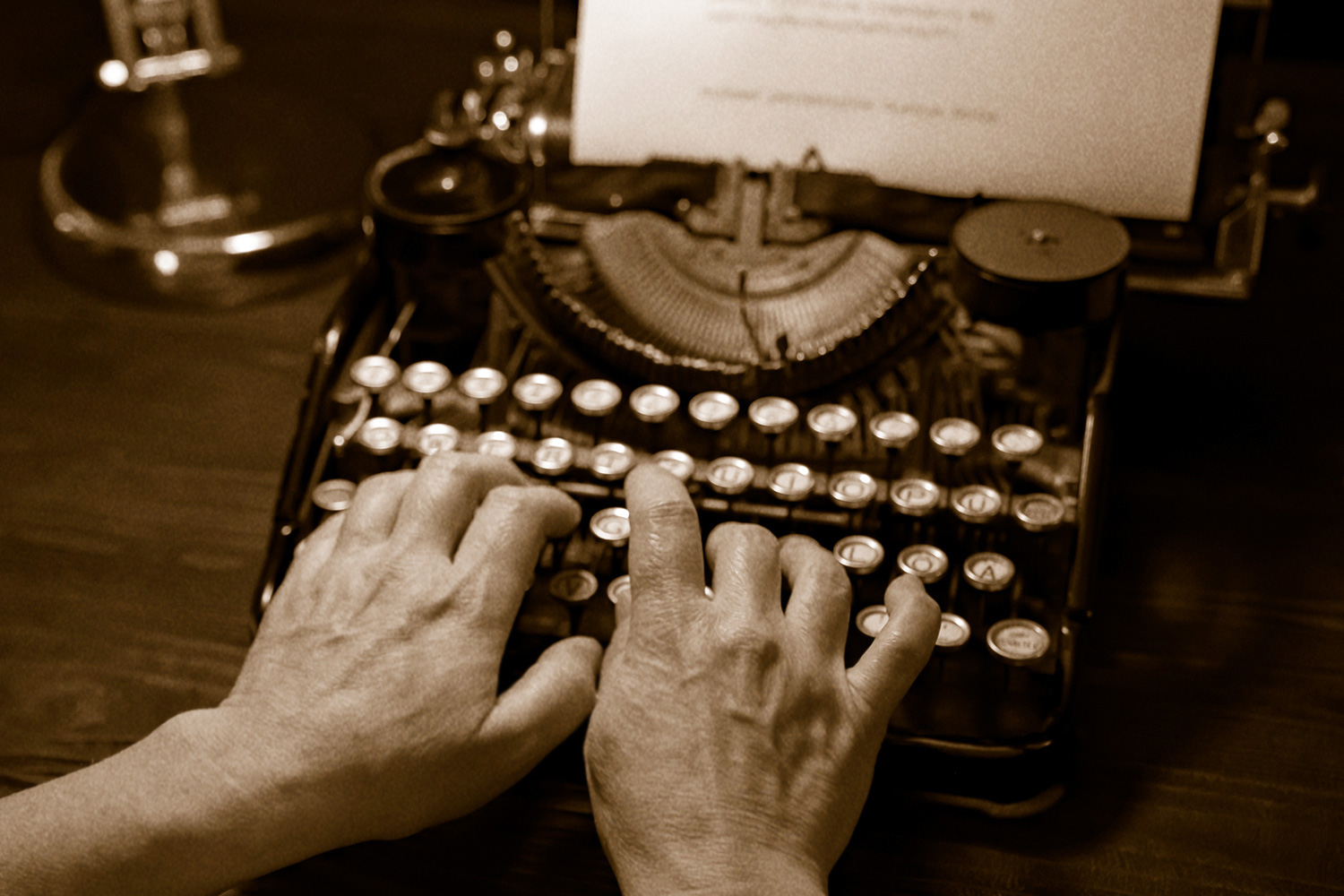
Dingle: I can only write one way — typewriter — straight out from my imagination. Neither pen nor pencil helps, nor any amount of notes, except such as are necessary to avoid errors of date or place. Imagination seems to keep up. When it slows, I know it’s time to clew-up for a spell.
Friel: Yes. Pencil.
Mundy: The typewriter seems best, but I am going to try a dictaphone by way of experiment. As regards the losing of ideas, “when found make a note of” is probably the remedy. Then the only difficulty is to force yourself to consult your note-book and, having consulted it, to link up again the hurriedly made note with the wonderful winged idea that inspired it.
The only stuff really worth writing is poetry, although I’d hate to have to read nothing else! The stuff I enjoy reading most of all is philosophy and metaphysics. Next after which, good books of travel and treatises on finance and bee-keeping hold the board.
I believe that the apex of exquisite enjoyment is, for instance, reading Kant or John Wesley and shooting their arguments all to pieces. But I can’t afford to enjoy myself.
About the author
Arthur Sullivant Hoffman (1876–1966) was an American magazine editor best known for editing the pulp magazine Adventure from 1912 to 1927. Before taking over Adventure, he worked on several magazines and wrote short stories. He also wrote several books on fiction writing, including Fundamentals of Fiction Writing (1922), Fiction Writers on Writing Fiction (1923), and The Writing of Fiction (1934).