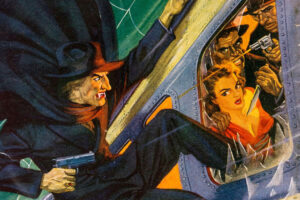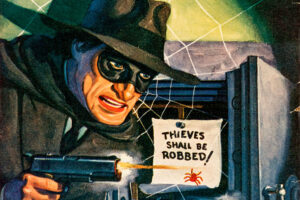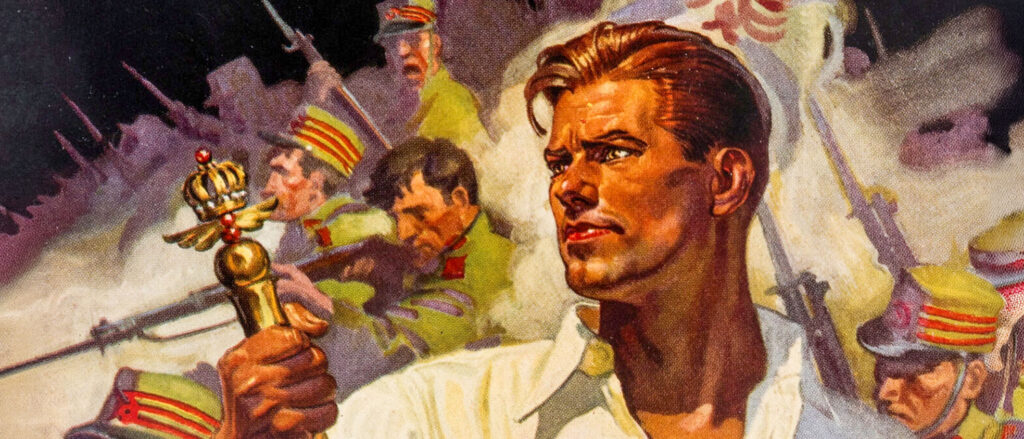
In March 1933, just under two years after The Shadow proved that a single-character hero pulp could sell, Street & Smith Publications introduced its second great hero pulp: Doc Savage Magazine. If The Shadow had perfected the dark mystery-man formula, Doc Savage moved the hero pulp into daylight: bronze-skinned, gold-flake eyes, and trained from childhood to become the finest physical and mental specimen the human species could produce.
Clark Savage Jr. — Doc Savage, the Man of Bronze — was a physician, surgeon, scientist, inventor, musician, and explorer, all in one impossibly capable package. That formula — the super-capable hero, the specialist team, the scientific arsenal, the private fortress, and the moral restraint — can be traced through the decades to the modern superhero.
 Doc Savage Magazine was developed by Street & Smith executive Henry Ralston and editor John L. Nanovic to capitalize on the surprise success of The Shadow. It was Lester Dent, though, who transformed the concept into something faster, stranger, and more influential than a simple follow-up. Writing under the house name Kenneth Robeson, Dent supplied the series’ headlong pace, scientific gadgets, and bruising humor. He wrote roughly 165 of the magazine’s 181 novels; the rest came from Harold A. Davis, Laurence Donovan, William G. Bogart, and a handful of others, all under the same Kenneth Robeson byline.
Dent described his hero as a cross between “Sherlock Holmes with his deductive ability, Tarzan of the Apes with his towering physique and muscular ability, Craig Kennedy with his scientific knowledge, and Abraham Lincoln with his Christliness.” That was not a modest recipe, but modesty was never the point. Doc Savage was designed as the complete adventure hero: brilliant enough to solve the mystery, strong enough to survive the trap, skilled enough to build the machine, and principled enough to believe that even criminals might be remade rather than simply destroyed.
Doc operated from a headquarters on the 86th floor of a towering Manhattan skyscraper, assisted by five specialists — Monk, Ham, Renny, Long Tom, and Johnny — whose collective skills extended his own. His cousin, Pat Savage, appeared frequently enough to qualify as a sixth aide, though Doc would have preferred she stay out of danger. (She had no such preference.) Criminals processed through Doc’s Crime College emerged with their memories of crime erased and their antisocial tendencies rehabilitated — a notably humane alternative to pulp-era gun justice, even if the brain-surgery ethics have aged less gracefully.
The character drew inspiration from a surprising source. According to Dent biographer Marilyn Cannaday and others, Nanovic modeled Doc’s appearance on Clark Gable, which may account for the character’s given name and some of his distinctive physical presence. Doc was, in short, a movie star in a pulp magazine, which may explain some of his enduring appeal.
 Doc Savage Magazine ran from March 1933 through the summer of 1949, monthly through most of its life before slowing to bimonthly and then quarterly publication near the end of the pulp era. It was one of Street & Smith’s last pulp magazines. By the time the Man of Bronze left the newsstands, the pulps themselves were giving way to paperback books, comic books, radio, television, and changing tastes.
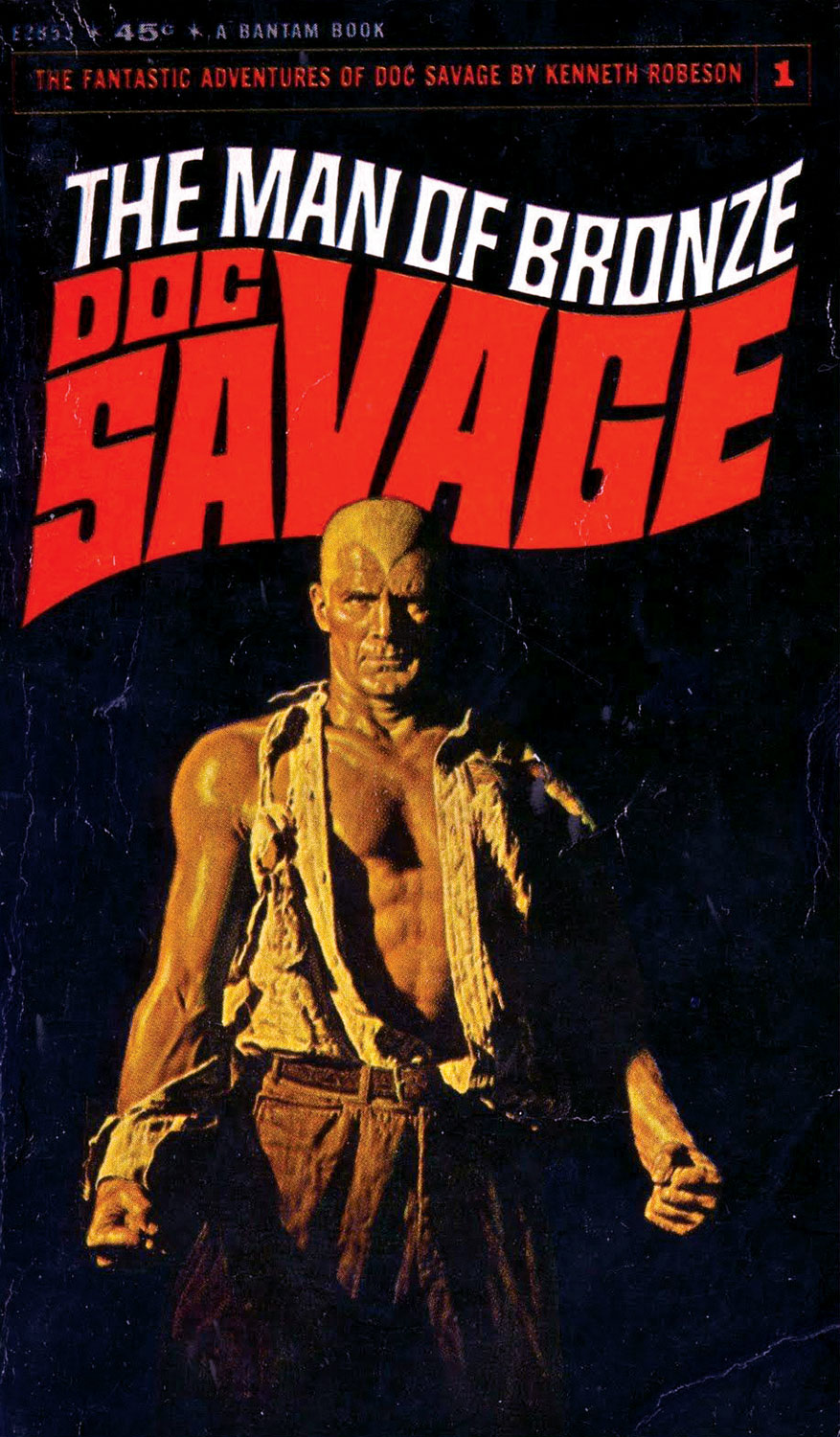
Bantam Books revived Doc in 1964 with a paperback reprint series that ran until 1990 and sold more than 20 million copies. Bantam art director and vice president Len Leone, working with cover artist James Bama, gave Doc the visual image that defined him for a new generation: bronze skin, widow’s peak, and a shirt that rarely survived the cover painting.
Doc also appeared in two pulp-era radio series, in 1934 and 1943, and returned to radio in 1985 through two NPR adaptations totaling 13 episodes. The 1975 film Doc Savage: The Man of Bronze, starring Ron Ely, gave the character his only major theatrical release, though Hollywood’s interest in a new adaptation has never fully cooled. A Sony Pictures project, with producer and screenwriter Shane Black attached, generated considerable attention in 2016. Ten years later, however, the project remains unmade.
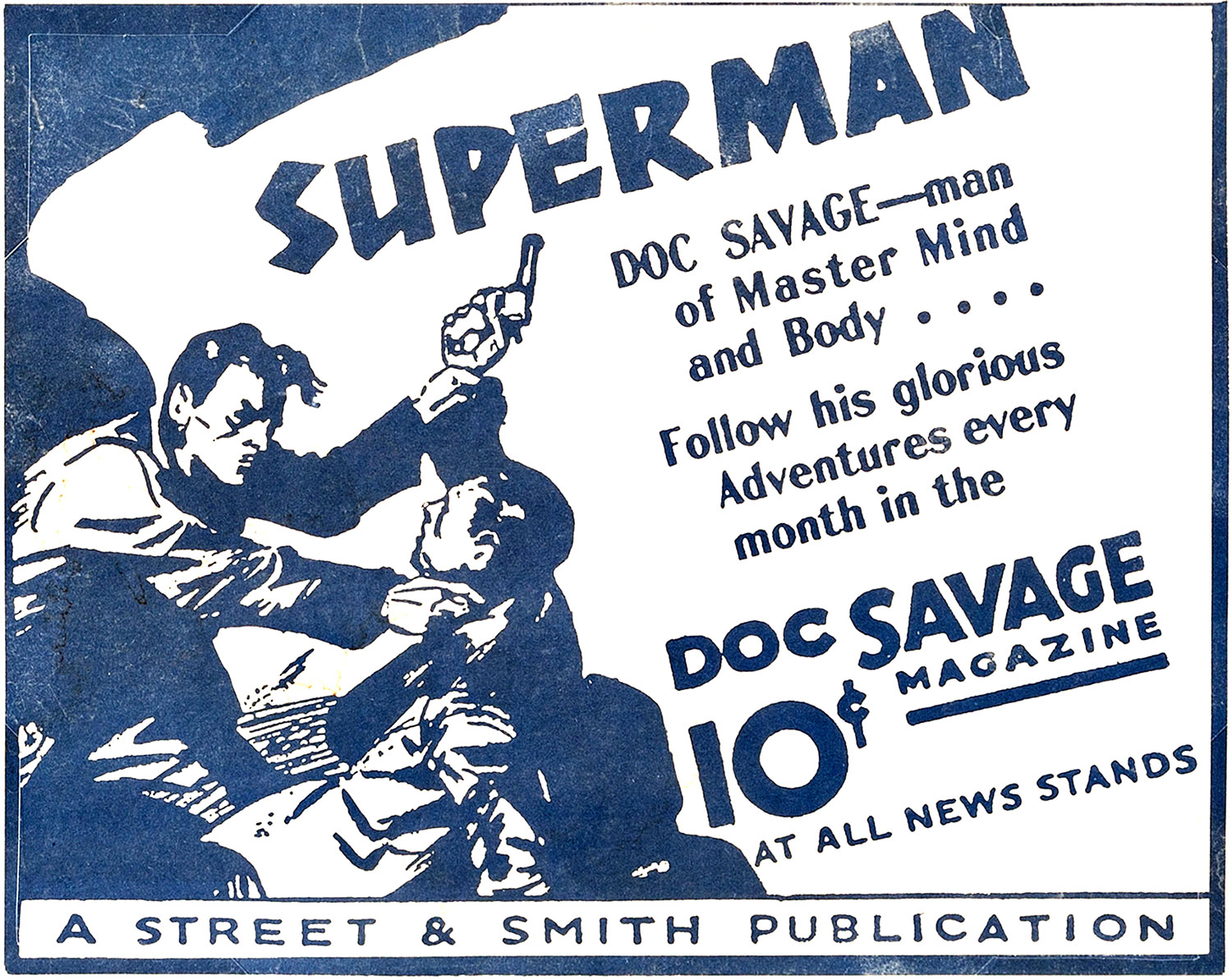
Doc Savage’s influence on the superhero genre is hard to overstate, though it is best understood as an inheritance rather than a simple one-to-one borrowing. In Street & Smith’s own advertising, Doc was described as a “Superman” well before Superman reached the comics. His combination of physical perfection, scientific genius, Arctic Fortress of Solitude, specialist aides, and moral code helped shape the heroic vocabulary that comic books soon made famous. Whether or not Jerry Siegel and Joe Shuster read the magazine, the Man of Bronze left fingerprints on the Man of Steel.
Learn more about Doc Savage
- Doc Savage links
- Here is ThePulp.Net’s curated collection of links covering Doc Savage, including fan sites, e-texts of the original novels, cover art galleries, film listings, and resources on the artists and authors behind the Man of Bronze.
- Doc’s pals
- Meet the Amazing Five — Doc Savage’s five trustworthy companions in the fight against evil — and what made them such an enduring part of the character’s appeal.
- A tale of two Clarks
- A look at how actor Clark Gable provided early inspiration for Doc Savage — in both name and appearance — during the character’s creation.
- Doc Savage on film
- Explore Hollywood’s long and mostly frustrated interest in Doc Savage, from the character’s 1933 debut through the 1975 feature film and the decades of development efforts that followed.
- Doc Savage lobby cards
- A gallery of the eight color lobby cards produced for the 1975 George Pal film Doc Savage: The Man of Bronze.