A 1922 defense of action fiction argues that adventure stories are not crude entertainment, but one of storytelling’s most fundamental forms
As people progress in culture, there is a strong tendency more and more to consider physical action in fiction crude. This is unfortunate — and unthinking.
The cause, I think, is twofold. First, most of the crudest published fiction relies to a great extent on action. It is natural and illogical to construct the following syllogism:
All crude fiction is action.
Crudity is poor art.
Therefore, action is poor art.
Second, as a race develops in civilization and culture, it nearly always tends to lose vigor, drifts further and further away from physical action, and more and more into ease, inactivity, and softness. It also tends more and more to nicety and detail and away from the elemental. Physical action is elemental and inclined to sweep nicety and detail aside. Naturally, both critics and writers come to consider action crude, something behind and beneath them. Consequently, as a rule, only the lower-grade writers use much action. Consequently, action stories as a whole sink to a still lower level. Consequently, readers feel still more justified in considering action crude. But is it?
False culture
Things would be vastly simplified and improved if all who think they know what really constitutes good literature really did know. Nine out of 10 have for sole standard the opinions of others. The “others” are fallible, many of them distinctly unreliable. The nine are, of course, unable to tell whose or which opinions are worth while. None of them does any real thinking of his own, and most of them do not even make the attempt. There are nine of them who do not to one who does think and does know. The resulting standard is painful. Also artificial and unsound.
A sad feature is that their methods tend to unify their opinions and thus give them the preponderating influence in shaping the opinions of all the people who don’t pretend to know. Professional critics being comparatively few, each critic sways many sheep. Also, the sheep have been referred, rightly enough, to The Atlantic as the “most literary magazine in America.” They accept its standard without discrimination or understanding. If a piece of fiction is different, in any way, from the fiction of The Atlantic, they therefore consider it unliterary. Worst of all, many of those who judge by The Atlantic standards have a bare bowing acquaintance with that most excellent magazine.
Editor’s note
This article originally appeared as a chapter in Hoffman’s The Fundamentals of Fiction Writing (1922).
Now The Atlantic, for all its scope and splendid humanness, in some respects savors of the library rather than of the rough world at large. Critics, being human, and being generally compelled to do a lot of criticizing, weary of the everlasting fundamentals and seek relief in attention to the niceties and curlycues, these being, also, more plentifully at hand. The sheep herded by the critics and by The Atlantic “habit” naturally come to look down, way down, upon the action story.
Also, popular demand for action in fiction continues strong. It is a cardinal tenet of the unliterary literary person’s belief that anything popular is therefore low. I shall not be surprised if some day all fiction that interests in any way is condemned because the popular demand is for fiction that interests.
Still another factor is at work. In clinging blindly to the classics as standards and models, many fail to discriminate either in recognizing just which qualities in a classic entitle it to lasting place or in allowing for the difference between the time in which it was written and our own times. Some of its qualities stand forever, but in many cases, other qualities lack that permanence of appeal and are very distinctly tuned to its own era. Is the verbosity of a century or two ago, or the sentimentality of the early Victorian period, in key with the spirit and genius of this century? How could it be when our whole civilization has rushed us into a hundredfold greater speed and intensity, surrounded us with a million incentives to practical activity and hurry? Railroads, steamships, trolleys, autos, modern newspapers, motion pictures, telephones, telegraphs, wireless, electricity, and machinery in general, these have geared us to a far faster pace. We can no longer travel naturally in stagecoaches. The Vicar of Wakefield, allowing it its excellencies, is no longer geared to living man. Therefore, in that respect, it is not a classic, not permanent, should not be even a subconscious model.
And in the choosing of books to be labeled classics, the natural inadaptability of the old generation to the new, together with the tendency to limit “literature” to products refined away from elementals instead of merely away from crudities, has still further cast action into disrepute.
All in all, the action story has a pretty hard time of it nowadays if it dares plead any claim to being literature.
Fundamental test
Yet, if the test of literature be its permanent appeal to human beings, regardless of changing times, the action story fares at least as well as the best.
To be permanent, an appeal must reach the only things that are permanent and universal in human beings; the only permanent and universal things are the elementary, fundamental ones, and “action” meets that test at least as well as anything else. Undoubtedly, the race was acting before it was psychologizing or even talking.
If proof of this fundamental and everlasting hold is needed, witness the widespread, undying demand for action stories. Also note the fact that most of the classics that have lived longest are crammed full of action — Homer, Virgil, any of the epics or sagas. No, they don’t live because of that alone, but could they have lived without it?
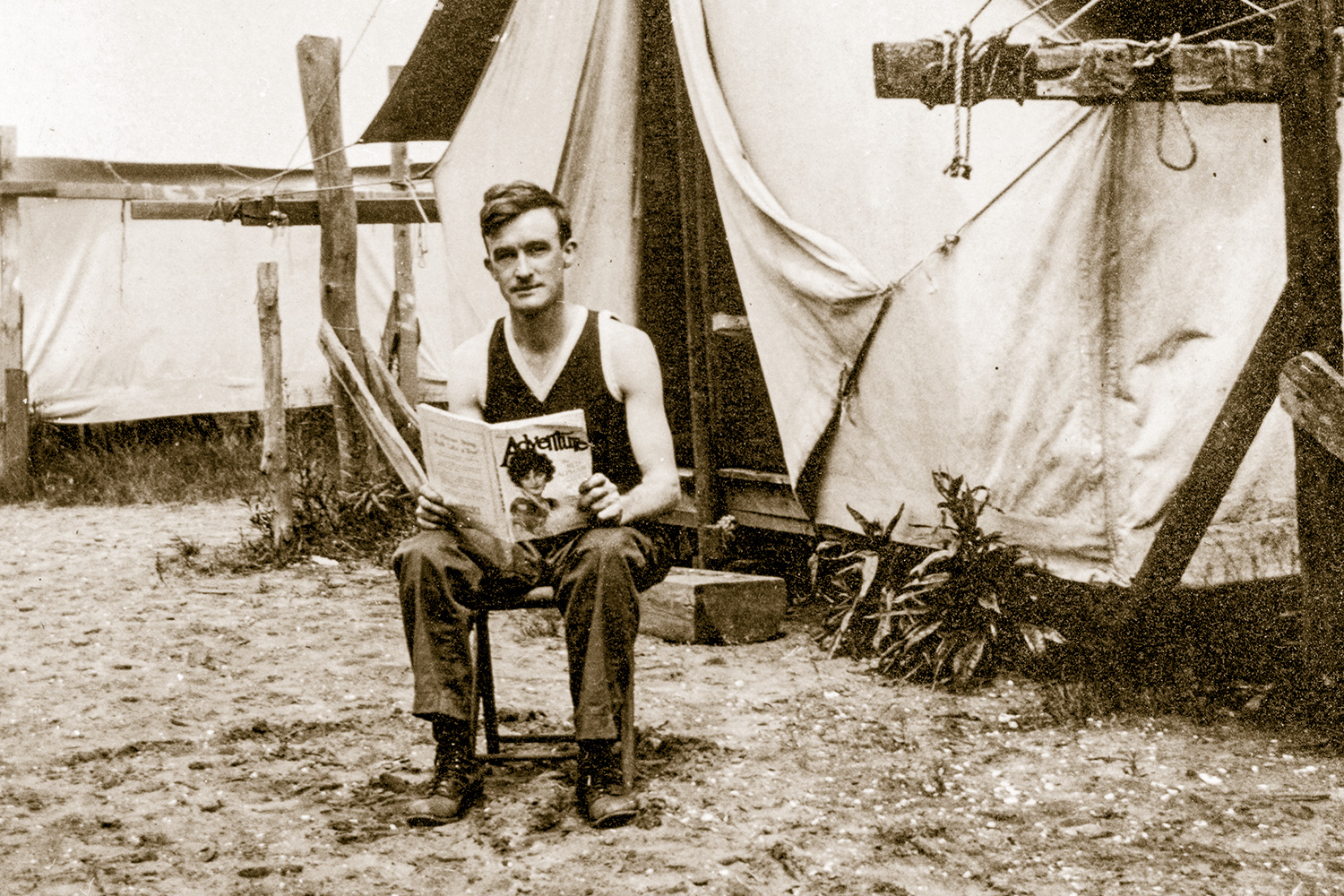
If you think that, for all their culture, the most sophisticated and literary specimens among us have really grown beyond the reach of the action appeal, you are much mistaken. Try them, when no one is looking, with a good action story, even one unsanctified as a classic. Scratch the skin, and you’ll find red corpuscles in even the most anemic blood. Somewhere deep in each of them is the impulse to do, and the admiration for doing. As children, they gave it natural outlet; has the leopard changed his spots? Neither restraint nor veneer, neither pose nor inactive living, can eradicate this thing the child was born with.
I’ve particular reason to speak on that point. Adventure was founded with the primary purpose of meeting this action demand on the part of the more cultured classes, the people whose normal reading is of the “highbrow” variety but who habitually turn at odd moments to stories of action, who accept “trashy” stories if no better offer, but prefer stories sufficiently well done to stand the test of their sophistication. The fact that the magazine’s secondary appeal is to those of less literary sophistication and franker interest in the elements in no way invalidates the primary aim or seems to limit its success. It is difficult to say which of these classes is naturally the more given to writing letters to magazines, but it is difficult to say which of them is the more heavily represented in my correspondence basket.
The latter, I suppose, depends upon where you attempt to draw a hard and fast line between the two classes. Professional men of all classes form a large part of the audience — physicians, lawyers, educators, scientists, engineers, statesmen, ministers, and priests; letters from those of undoubted culture in the ordinary sense of that word are very strongly in evidence; more than once the definite, concrete statement has been volunteered that “I read only two magazines — The Atlantic and Adventure.” Yet, personally, I find it not always easy to say that this general class has a keener sense for what seem to me the essential literary values. More articulate and with better opportunity for comparisons, yes, but with point of view more obscured by their sophistication. However, there is no doubt as to the common action appeal to both extremes of the audience, and nearly a dozen years have eradicated my last doubt of action response beneath even the heaviest veneer of culture.
Its audience is about 85 percent men, but other action magazines, aimed at both sexes, have audiences nearly equally divided as to sex. Eliminate sex appeal, the love element, and, even with women, action appeal will take first place.
The rightful place of action in literature
A story is a narrative. A narrative implies events, is a record of action, not a treatise, a laboratory record, or a post-mortem.
In addition to its claim to place in the best literature because of its fundamental and permanent appeal and in addition to its being the essence of narrative, there is one thing more to be said.
In its crudest expression, you may consign it to what depths you please, but in its essence, in its potentialities, I challenge you to deny it the highest rank of all as material of fiction. For action is the crystallization of psychology. It is the ultimate, final expression of character, of all a character has thought, felt, and said, of all a character is or can be. Physical action. It need not be exciting and adventurous. It may be expressed negatively, through repression. But psychology, character, morals, what you will, none of these has been really born into the world, has borne recognizable fruit, until it has, in some manner, acted physically, or taken physical shape through action.
It follows that, in literature at its best, action must be the perfect, logical, inevitable, and complete result and register of all psychology of the characters in relation to all circumstances and conditions of the story. No other element of literature has so difficult a test to meet, for, aside from its own demands, it must be the final and exact expression of everything else in the story.
Yet the action story is sweepingly condemned as a type!
The place of action in practice
Nothing can make more plain the undiscriminating contempt for action as fiction material than the actual practice of most writers. Action, being in its crude form the simplest material as well as the most natural, the majority of writers begin with it. Generally, as they gain in skill they develop, at about equal rate, the idea that all action is crude and that real progress lies in abandoning it as rapidly as possible. In many cases, the result is merely the absence of fairly good action stories and the creation of very sad but very “literary” productions. In nearly all cases, the cause of the change is due to failure to understand action’s potentialities and rightful place, and the result of that lack of understanding is generally failure to produce the real literature intended.
By all means, try to rise above the crude “Diamond Dick” type of action story, but be sure you can substitute something better, aside from improved technique. Better a story of rather crude but convincing action than a miserable mess of half-baked psychology and falsely glittering “literary finish” whose chief proof of literary quality must be its freedom from physical action. If you sincerely intend to do real literature, get firmly into your head the truth that action should be the perfect crystallization of all else in your story, and then use as much or as little of it as is needed for that crystallization. If you try that, you will get an extreme test of all the literary ability you can summon, and if you succeed, you will have attained what only the comparative few are capable of attaining. Even to make a start, you must rid yourself of the absurd idea that action per se is unliterary.
Popular demand
Since the Great War, popular demand for action fiction is stronger than ever, despite the strong antipathy for material directly connected with it and despite a definite reaction in favor of quiet, peacefulness, and things spiritual.
If it’s popular demand you’re considering, consider this: Real life, perhaps now more than ever before, consists very largely of restraints and inhibitions. Human nature is just as human as it ever was — there are just as many things in it to be restrained and inhibited. And, underneath all our civilization, we’re just as tired of having to do it — probably more so, since our civilization is more civilized and therefore more exacting than its predecessors.
If we can’t escape from the fetters in real life, can’t be free to follow our undoubted impulses, as readers, we’ll all the more welcome a chance for vicarious freedom.
About the author
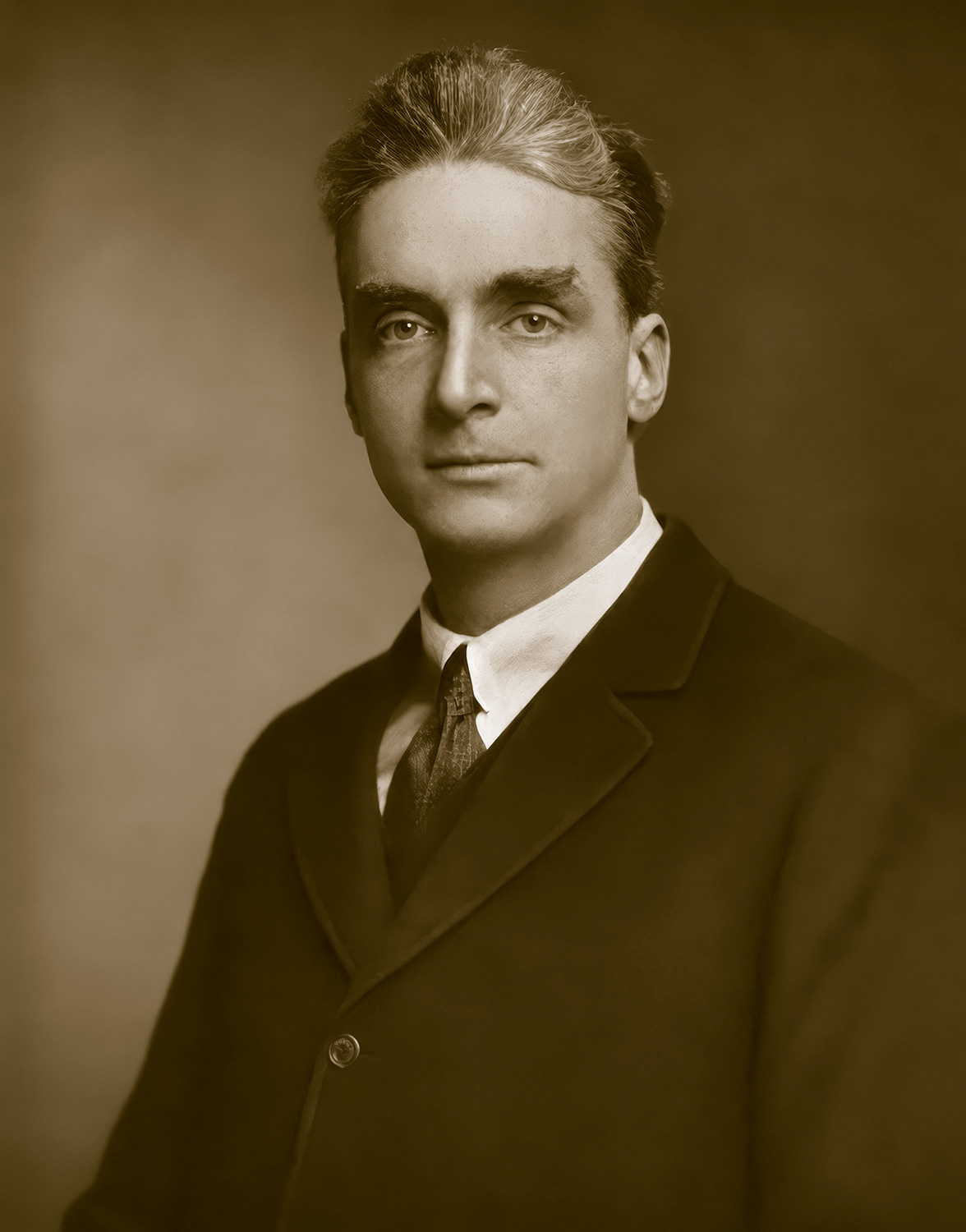
Arthur Sullivant Hoffman (1876–1966) was an American magazine editor best known for editing the pulp magazine Adventure from 1912 to 1927. Before taking over Adventure, he worked on several magazines and wrote short stories. He also wrote several books on fiction writing, including Fundamentals of Fiction Writing (1922), Fiction Writers on Writing Fiction (1923), and The Writing of Fiction (1934).