

I have previously posted on Arthur O. Friel (1885-1959), who was an explorer and author of adventure fiction, much of it through Adventure. He had actually explored South America, wrote a non-fiction work about this, and used his knowledge and experience in his writing.
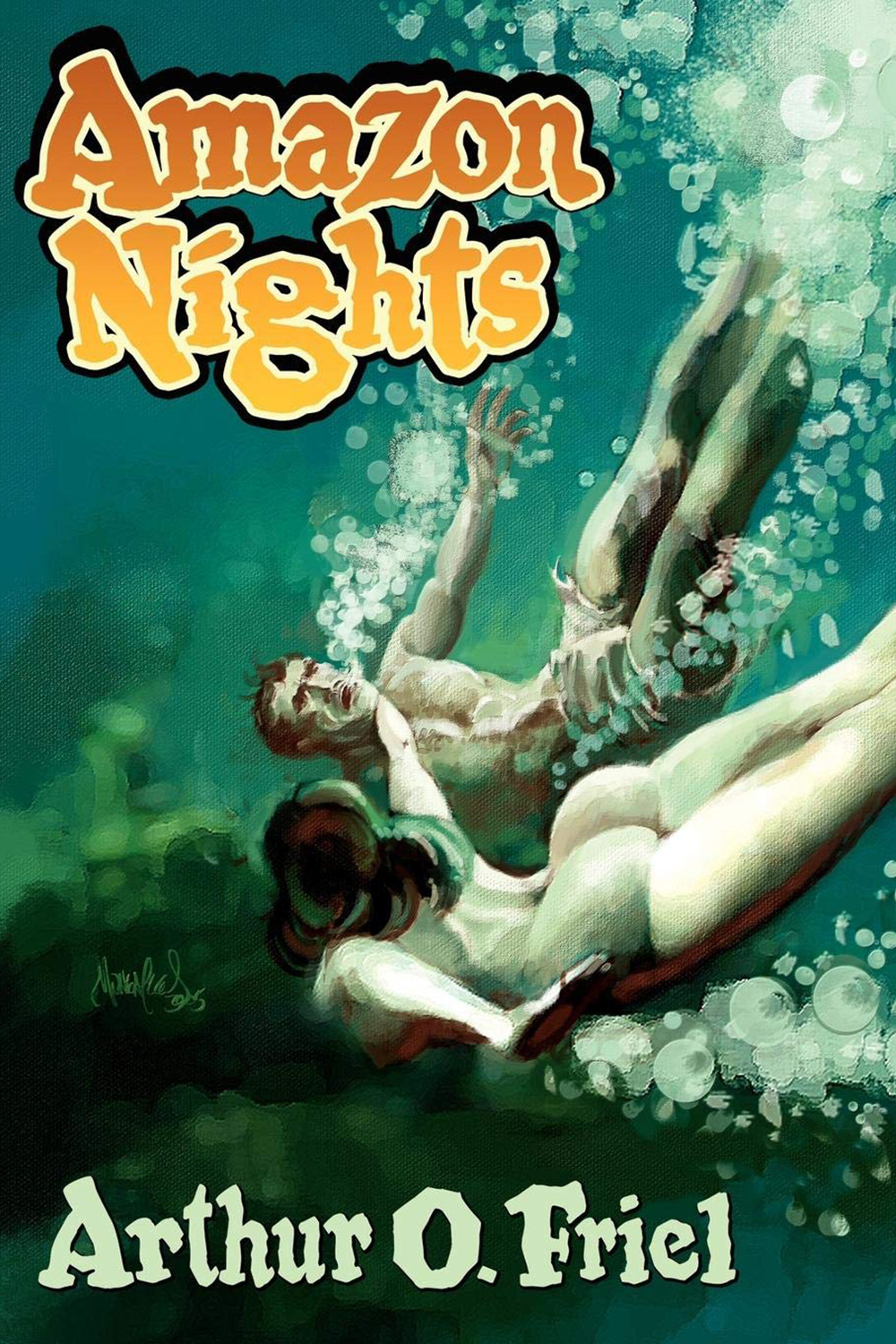 His first work at Adventure was the Pedro and Lourenço series, about a pair of rubber industry workers having strange adventures in the jungles between Peru and Brazil. It ran for 10 years for over two dozen stories.
Annoyingly, there is not one single collection of all the stories, and sadly, the last five have never been reprinted. Instead, those that have been reprinted are collected in four volumes from two different publishers and have some overlap in stories. Because of that, I have indicated which volume the stories are from. I read them in order.
- Amazon Nights: Classic Adventure Tales From the Pulps (Wildside Press, 2005) (AN)
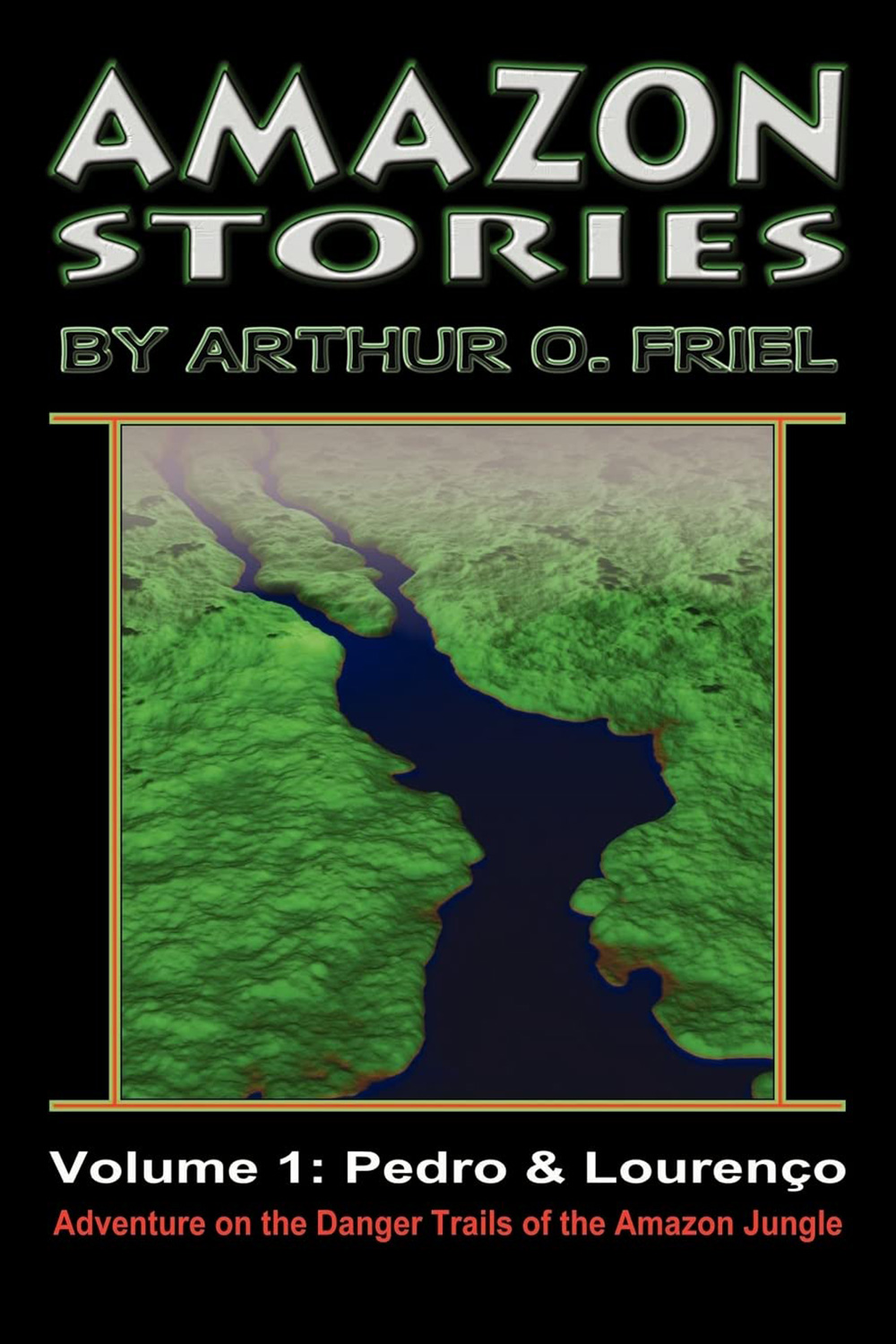
- Amazon Stories Vol. 1 and 2 (Off-Trail Publications, 2008 and 2009) (AS1, AS2)
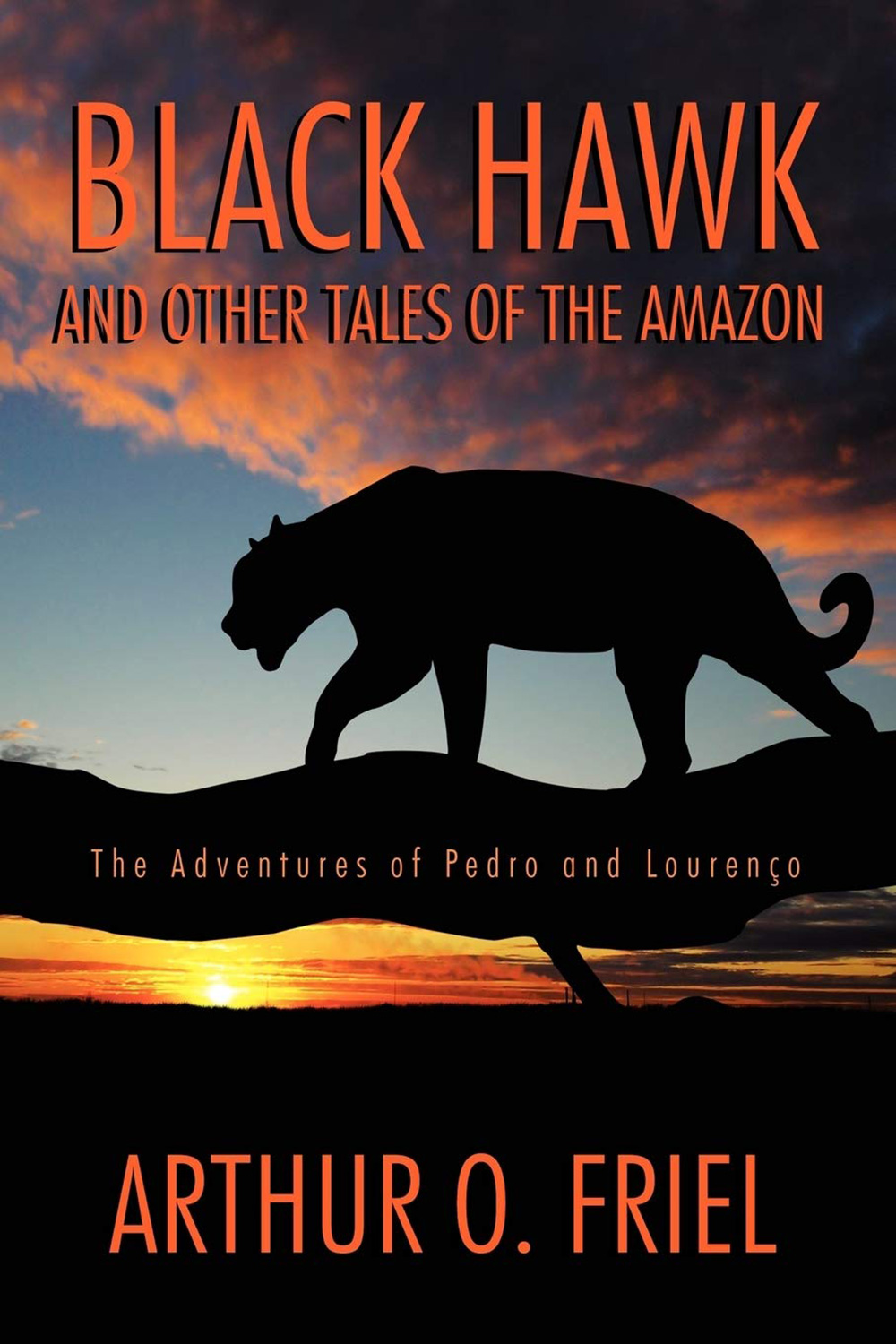
- Black Hawk and Other Tales of the Amazon: The Adventures of Pedro and Lourenço (Wildside Press, 2010) (BH)
The two Amazon Stories volumes reprint the first 20 stories, along with items from “The Campfire” (the commentary section from Adventure) from Friel. Both volumes have a very nice pair of intros by John Locke on Friel and his writing, and notes that he probably used the works In the Amazon Jungle (1912) and The Lower Amazon (1914) by Algot Lange for this series, as his first-hand experience is up in Venezuela in 1922 and not the Javari River area. I wish Off-Trail Publications had put out a third volume with the rest of the stories, leaving out “Pathless Trail.”

Amazon Nights reprints several stories already in Amazon Stories, but has two additional ones, including the novelette “The Jaracara.” There is a short intro on Friel as well. And Blackhawk reprints the title story, another work, and “Pathless Trail,” which is available elsewhere.
Since then, we have a collection of four new stories, Gods of the Amazon: Further Tales of Pedro and Lourenço by Daniel Ross. It has a very nice cover and interior art, done by AI, along with a good intro and afterward. This is a bit of a different take, as this time the two encounter more supernatural beings. The stories are good, but they are different.
The series is composed of the following, most of them being short stories or novelettes:
- “The Snake” (Sept. 18, 1919), AS1
- “The Sloth” (Oct. 18, 1919), AS1
- “The Spider” (Dec. 1, 1919), AS1, AN
- “The Jaguar” (Jan. 3, 1920), AS1
- “The Jabiru” (Jan. 18, 1920), AS1
- “Clay John” (FebFeb. 3, 1920), AS1
- “The Peccaries” (March 3, 1920), AS1, AN
- “The Vampire” (April 18, 1920), AS1
- “The Mother of the Moon” (June 18, 1920), AS1
- “The Armadillo” (Aug. 18, 1920), AS2
- “The Tapir” (Oct. 3, 1920), AS2, BH
- “The Firefly” (Nov. 3, 1920), AS2, AN
- “The Tucandeira” (Dec. 3, 1920), AS2
- “The Vulture” (Jan. 3, 1921), AS2
- “The Tailed Men” (Feb. 18, 1921), AS2, AN
- “Wild Women” (March 13, 1921), AS2
- “The Trumpeter” (May 3, 1921), AS2, AN
- “The Barrigudo” (June 3, 1921), AS2, AN
- “The Ant Eater” (July 18, 1921), AS1, AN
- “The Bouto” (July 18, 1921), AS2, AN
- “The Pathless Trail” (October-November 1921), BH
- “The Jararaca” (Dec. 30, 1921), AN (includes Thomas Gordon Mack)
- “Black Hawk” (March 10, 1922), BH (includes Thomas Gordon Mack)
- “Tupahn—The Thunderstorm” (May 10, 1922)
- “Scarlet Face” (June 1, 1929)
- “Spiderlegs” (June 15, 1929)
- “Owl Eyes” (Dec. 1 1929)
- “Red Giants” (Dec. 15, 1929)
All the stories, other than “Pathless Trail,” are told in first person by Lourenço Moraes, mostly to a group of Americans returning home by way of a steamer going down the Amazon River. All are set in the general area of the Javari River, which is on the border between Peru and Brazil, and flows into the Amazon, and the surrounding locations.
 With the fifth story, Pedro Andrada joins him, and then returns with the eighth story and continues. Both work for Colonel Nunes, a rubber baron in the area. As the stories are being related to others, these are not told in the order they occurred. In one, Lourenço makes mention of a previous event, which he later related.
I have read the first 20 stories. The titles may make one think they are concerned with the local fauna, but instead, the names refer to different people that are encountered. Some are good, some are evil. Some are Americans who have traveled to the region, while others may be locals or Peruvians, or the like. In some, there is violence and death, but in others, there is not.
In “The Sloth,” the story concerns an American who comes to the area to seek his fortune. But after receiving a letter, he becomes a despondent “sloth.” Then an American couple appears, and we learn the truth. His sweetheart was told he had died in the Amazon and married another. Her husband dragged her here as he tries to make a fortune. But things don’t go quite as he thought. Things do turn out happily for some.
In “The Jabiri,” an American naturalist comes to the area. Due to being tall and thin, and always wearing a long white coat, he is named for a bird similar to a stork. The locals chide him for not carrying a weapon, but he brushes it off. He seems to take a strange interest in a sullen Peruvian who is called “The Toad.” We learn that he is looking for someone who had beaten his wife to death and fled Peru, and then beaten, robbed, and left for dead, a friend of the naturalist. The friend soon passed away after returning to the States. The Toad tries to kill the Jabiri, but he learns he is not so helpless. But jungle justice takes care of the Toad.
In other stories, they almost fall victim to vampire bats, meet an old Scotsman in armor who is fighting against headhunters who killed his only son, meet an anteater with a pet monkey who fights and kills three men who killed his pet and wanted to take his gold, and more.
“The Tailed Men” is the closest to a cryptid-type story when they find a tribe of men with tails.
If you haven’t checked out these stories, do so. They are all enjoyable.


Your comments