I have previously posted on The Burroughs Bibliophiles, a literary society devoted to the works of Edgar Rice Burroughs (1875-1950). It was first established in 1947 by Vern Coriell (1918-87), who started The Burroughs Bulletin as the magazine for the group. He secured the approval of Burroughs at the time, which continues to this day.

The original Burroughs Bulletin ended in 1977. Later in 1990, the group was re-organized by George McWhorter, who restarted the Bulletin with new numbers as the “New Series.”
When I joined, I was working to complete my set of the New Series, which I am still working on. Then I figured I wouldn’t bother with the “Old Series,” but I happened to get a couple of issues, and I started to get more issues. I don’t yet have a complete set, but I thought I should post on this series to help others.
So in working to complete a set, I discovered some problems. I’m not sure which is the most annoying. One is that there are several combined issues, as has happened with the New Series. There might be double, triple, or even quadruple issues. More annoying, which I don’t understand, are the skipped issues. Certain issues were planned, and for whatever reason, something happened, and instead of the next issue having the next number, the issue number would be skipped. I had to find out what the skipped issues were so I wasn’t wasting my time searching for nonexistent issues.
So don’t bother looking for issues #23-24, 25-28, 47-50, 53, 56, 61-64 as they don’t exist.
I’ve also been burned by people on eBay offering “facsimile” issues. Basically photocopies, but this was only noted in the description, whereas the photo used was from a real issue. Be on the lookout.
And the last problem is that some issues, due to containing artwork by certain popular artists, are offered at ridiculous prices compared to others. So I had to spend time looking for reasonably priced issues.
Most issues are 8.5- by 11-inches, though I’ve found some inconsistency in that. Also, as I’ll note, one issue is digest size. I won’t go into my usual issue-by-issue in-depth review. You can actually access indexes at the ERBzine website.
When The Burroughs Bulletin started off with the first issue in 1947, it looked more like a newsletter than a journal. The first few issues were about four pages long, and we actually got six issues just in 1947 alone. I’m not sure when the next three issues came out, but #12 came out in 1956 at 40 pages, and then nothing for several years.
The Burroughs Bulletin #13 came out in 1962 at over 30 pages. With it was a separate supplement, a John Carter pastiche, “Lost on Jupiter” by William Gilmour, that was published in a limited edition. It’s now pretty pricey, but was later reprinted.
The Burroughs Bulletin #14 came out in 1963, at a little less than 30 pages. Also with this one is another supplement, a Tarzan pastiche, “Tarzan and the Lightning Man” by William Gilmour, also limited edition. It too is a bit pricey, but was later reprinted. The same year, under the new House of Greystoke imprint, the Bibliophiles put out a digest-sized reprint volume of the first 12 issues. I’ll be posting on the output of the House of Greystoke separately.
The next few issues of the Bulletin were coming out about once a year, again looking a bit like a newsletter, but with a wide range of material. There can be articles, new and old fiction, comic-strip reprints, and more. They would be anywhere from 28 to 54 pages in length. They were able to put out #19 and #20 in 1970, so it started to come out about twice a year.
The Burroughs Bulletin #21 came out in 1971, and with this issue, the Bulletin moved from looking like a newsletter to a journal. However, something that does occur is that they didn’t always identify on the cover that what you had was a Burroughs Bulletin. This issue also published another pastiche by William Gilmour, “Back to the Earth’s Core.” As far as I know, this one has never been reprinted.
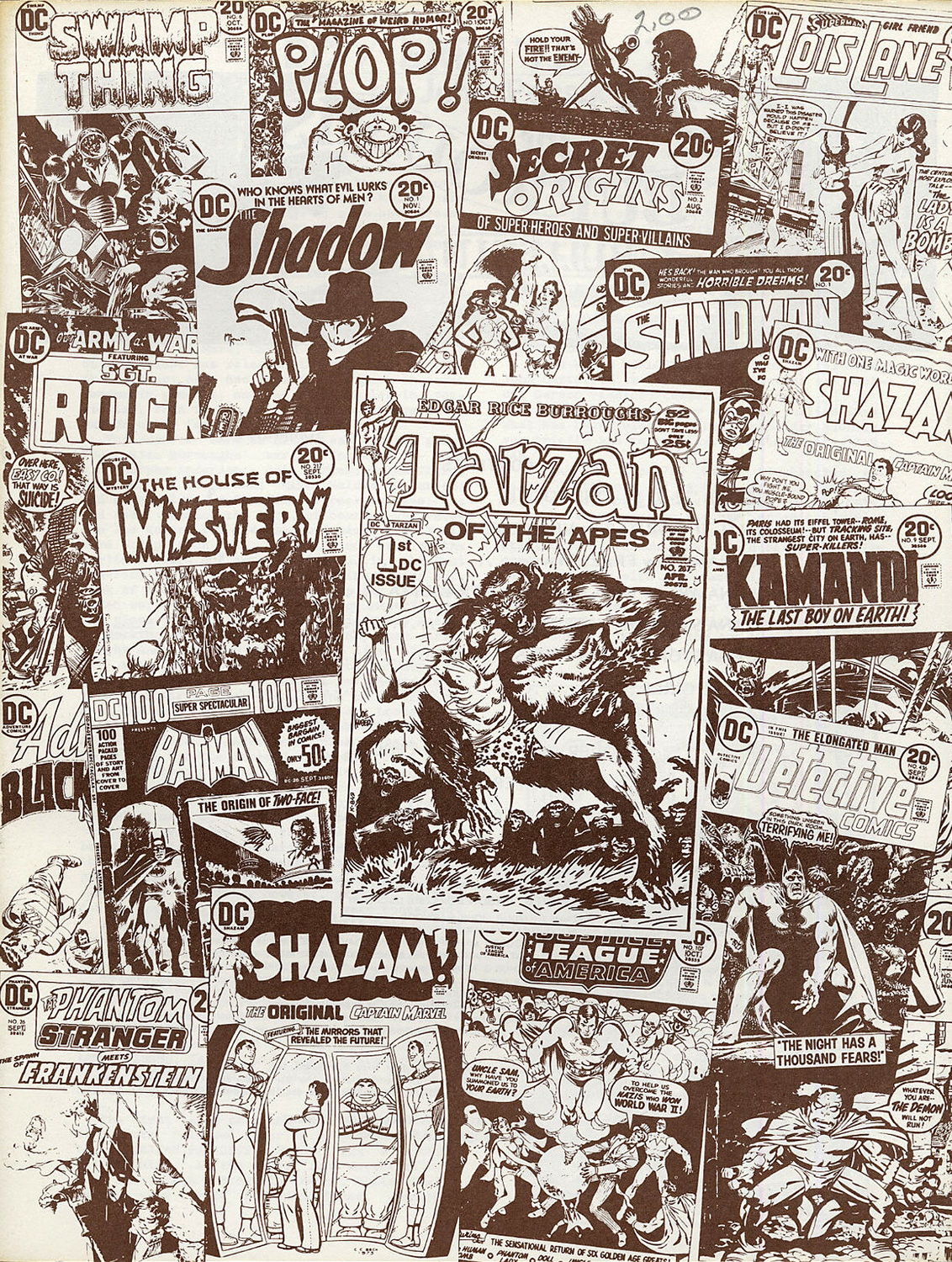
The Burroughs Bulletin #25 (Spring 1972) focused on artist J. Allen St. John. But it does not identify itself as a Bulletin on the cover. The Burroughs Bulletin #29 (Spring 1973) focused on artist Frank Frazetta and also does not identify itself as a Bulletin on the cover. The Burroughs Bulletin #30 (Summer 1973) and The Burroughs Bulletin #31 (Fall 1973) also don’t identify themselves on the cover.
The Burroughs Bulletin #34 (February 1974) has color artwork by Richard Corben of Tarzan meeting La of Opar, and because of this, the price for this issue can be crazy.
The Burroughs Bulletin #37 (May 1974) reprinted the ERB story “Skeleton Men of Jupiter.” That was appropriate because the next issue, The Burroughs Bulletin #38 (June 1974) reprinted the sequel, “Lost on Jupiter” by William Gilmour. It does identify on the cover that this is Bulletin #38. This is important in distinguishing it from the original.
The Burroughs Bulletin #39 and #40 (both from 1974) reprint two versions of a story by Burroughs that had Ray Palmer involved with it. #39 has “Beware!” as by John Tyler McCulloch, who was actually Burroughs. It’s the original, and previously unpublished version of the story “The Scientists Revolt,” which appears in #40. That one reprints the version that saw print in Fantastic Adventures in 1939. Also, #39 has artwork by Corben, so again, its price can be ridiculous.
The Burroughs Bulletin #41/42/43/44 (September-December 1974) is a “quad issue.” It reprints directly from the pulps the novel “The Red Star of Tarzan,” better known as “Tarzan and the Forbidden City.” However, they reprinted the original cover from Argosy without any markings that this is an issue of the Bulletin. Thus, when I ordered a copy from a vendor, I actually got the Argosy issue. However, when I got the actual issue, I found that it is in digest size. So that’s the main distinguishing feature.
The Burroughs Bulletin #51 (July 1975) reprints “Tarzan and the Lightning Man” by William Gilmour, which had been previously published in the 1960s as a limited-edition supplement. But there is nothing on the covers to indicate this. So it can be hard to know if you are getting the 1960s limited edition or this issue of the Bulletin.
The Burroughs Bulletin #57/58 (1976) reprinted one of Burroughs lesser-known works, “The Efficiency Expert.” The Burroughs Bulletin #59/60 (1976) reprinted a similar work by Burroughs, “The Girl From Farris’s.” Both works were attempts by Burroughs to write more mainstream fiction. And both had been previously published by the Bibliophiles through the House of Greystoke in limited editions. But be careful, as some sellers may not be clear that they are offering these issues and not the limited-edition books from the 1960s.
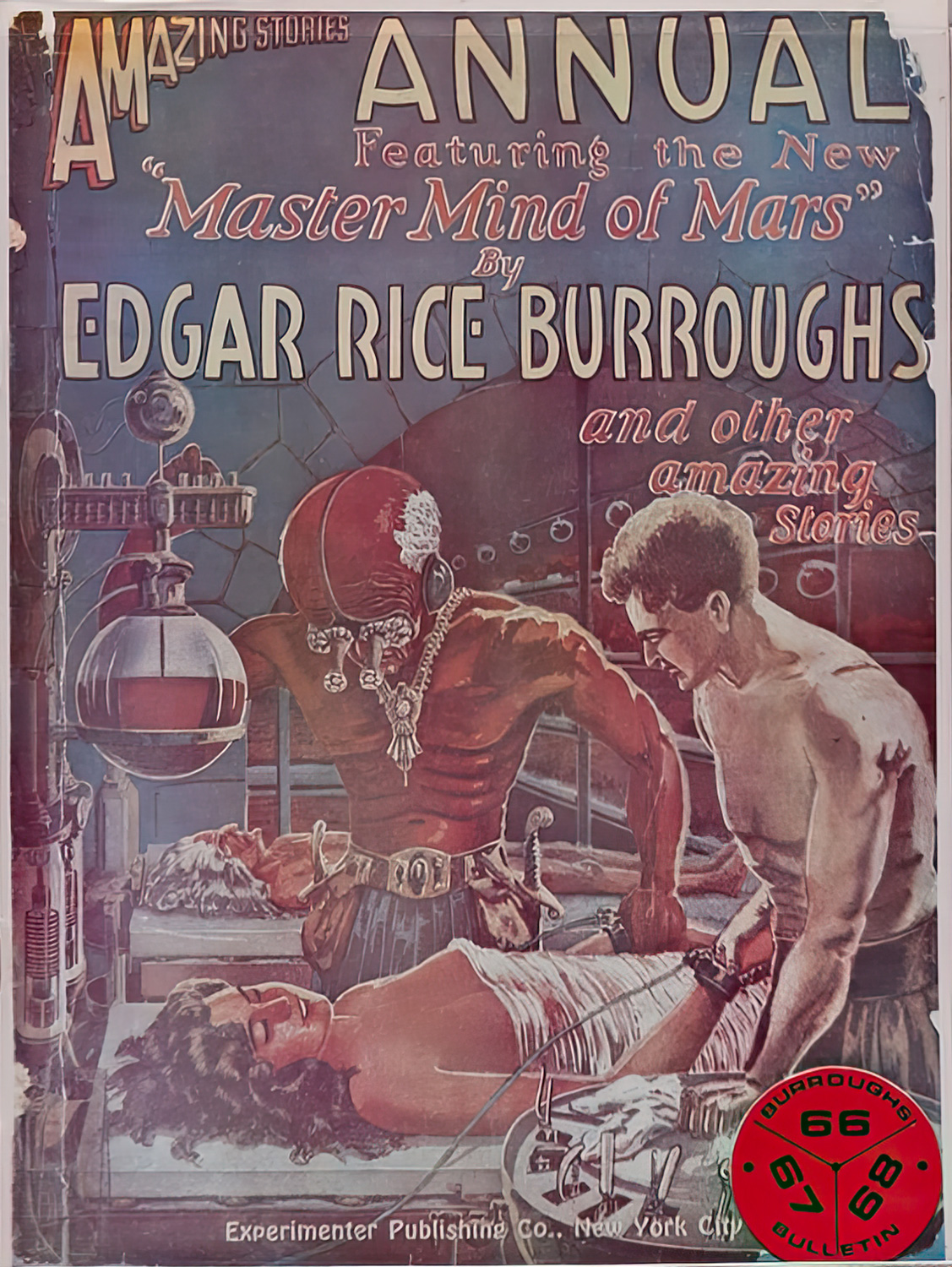
The last issue, The Burroughs Bulletin #66/67/68 (1977), is a triple issue. It reprints Burroughs’ “The Master Mind of Mars” along with the cover from Amazing Stories. This had previously been published as The Burroughs Bibliophile #5, but the cover of that instead says The Burroughs Bulletin #5, so that is sometimes offered incorrectly as issue #5.
Hopefully, this will be of use to others. I hope to complete my collection of both series of the Bulletin. I encourage anyone who is a fan of Burroughs to join the Bibliophiles as well. It’s worth it just for the journal.
I will be posting on the output of the House of Greystoke soon, and note some of the other publications from the Bibliophiles like the Dum-Dum, Barsoomian Bazaar, and the Gridley Wave.