

This will be one of three postings on U.K. author John S. Glasby (1928-2011).
 Glasby, surprisingly, had two parallel careers. After graduating from college, he had a long career as a research chemist and mathematician. At the same time, he was an author of several hundred works in a variety of genres using several pen names. He wrote westerns, romance, crime, spy, science-fiction, and war stories. But my interest here is in his supernatural stories, which were often inspired by the Lovecraft mythos.
Here, he wrote several short stories and a few novels. In recent years, these have been collected and published by several presses, thankfully with no overlap in stories. He also wrote four authorized Golden Amazon novels, following the originals by John Russell Fearn. I will get to those as I work through that series.
What may be his magnum opus in the area of Lovecraftian works is his “Dark Armageddon Trilogy,” which sadly did not see print until after his passing. It tells of a group of men working to stop the imminent return of the Old Ones, Cthulhu, Azathoth, et al. Will they succeed?
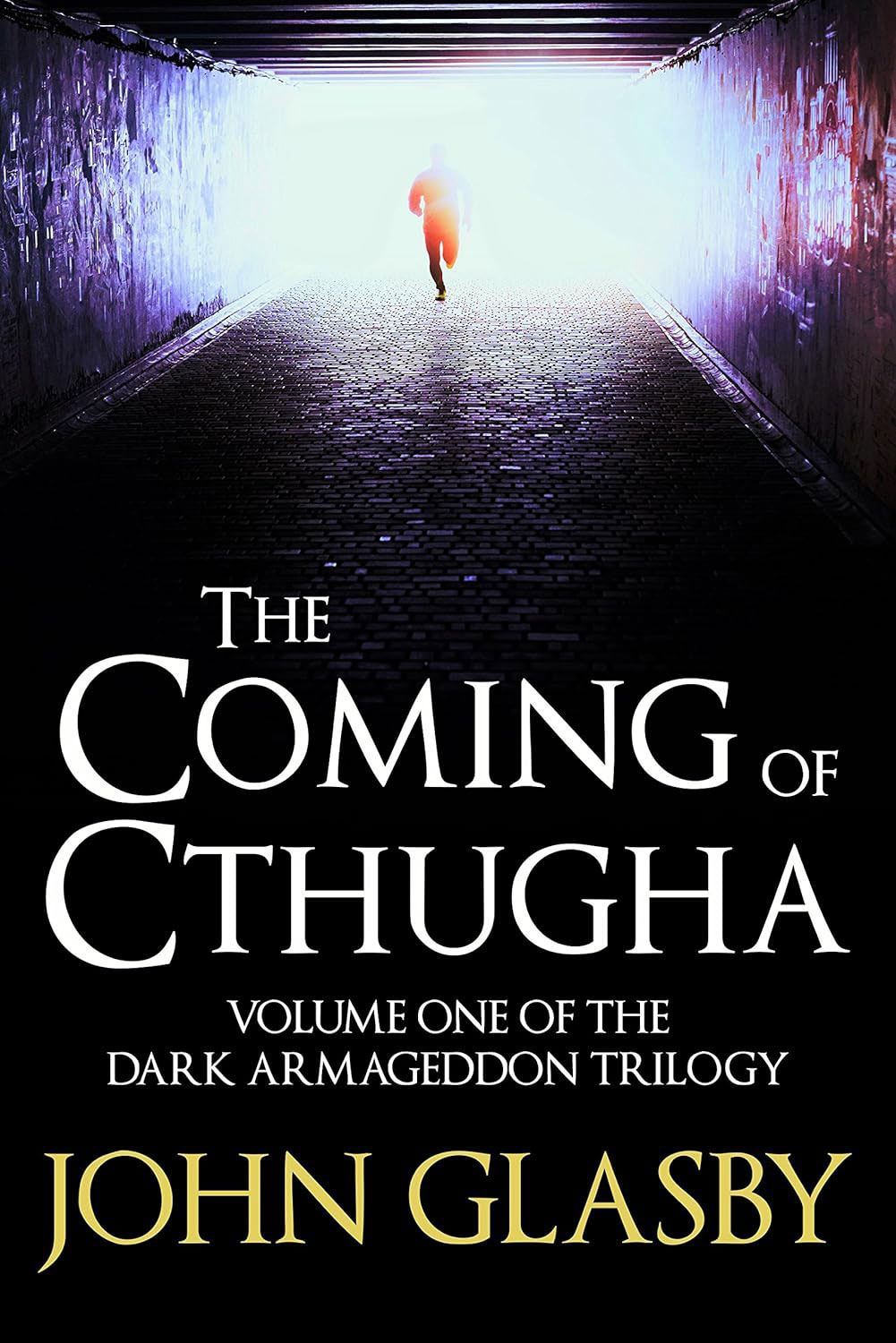
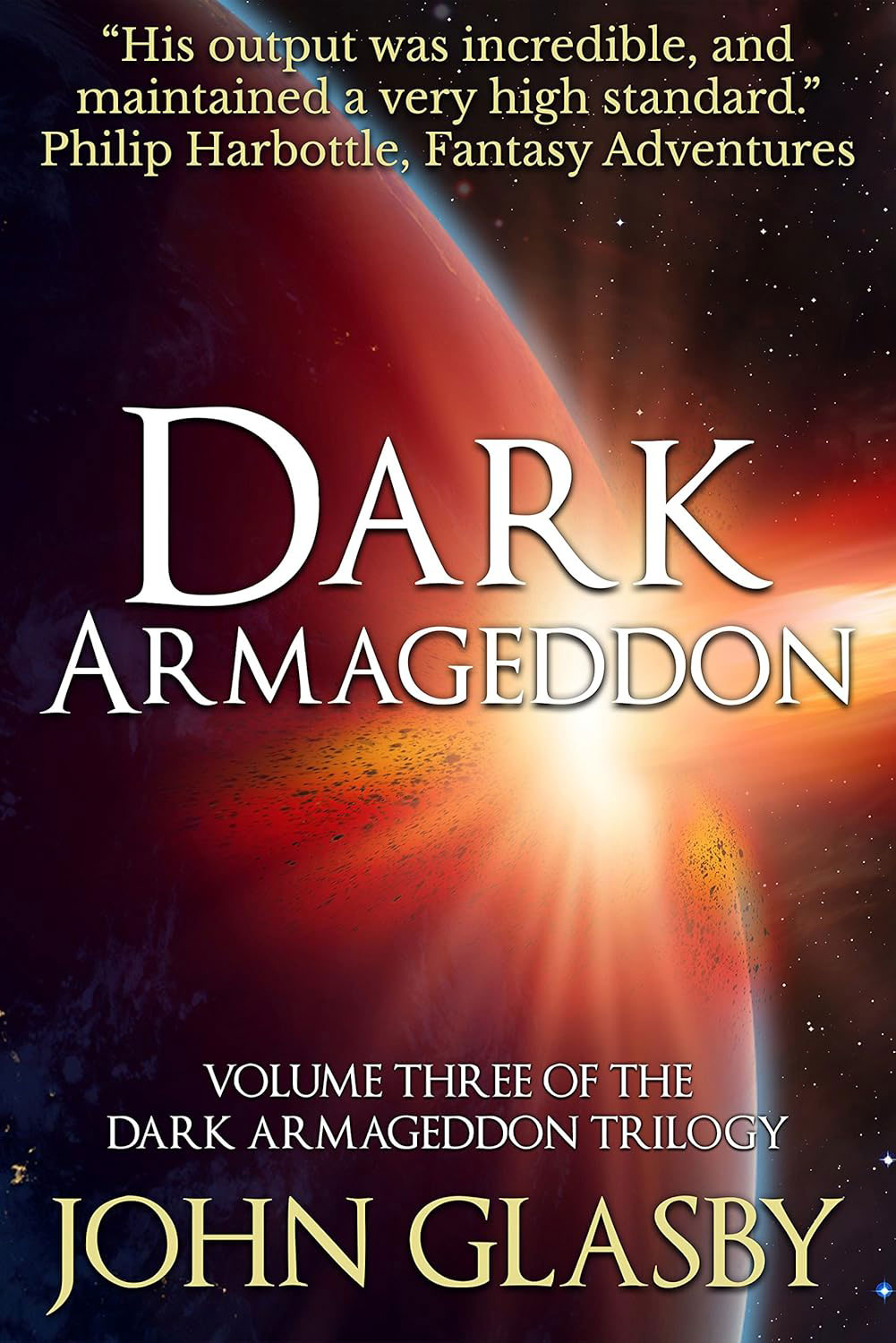
The trilogy consists of The Coming of Cthugha, Dawn of the Old Ones, and Dark Armageddon. They were not published until 2016 and 2017 through Venture Press in ebook and print.
If your take on the cosmic horror of H.P. Lovecraft is that, should the Old Ones return, there is no way we could prevent this, then you probably won’t like this trilogy. If you are open to the idea that we could, though at a great loss, such as what is seen in F. Paul Wilson’s Repairman Jack series, then you may enjoy it.
Now, the background of this work is clearly based more on August Derleth’s idea of there having been a “war in the heavens” between the Elder Gods and the Old Ones, with the Elder Gods winning and exiling or imprisoning the Old Ones around the universe until “the stars are right.” The Elder Gods are the “good guys” vs. the “bad guy” Old Ones.
Here we have an unnamed (at first) “Organization” of men around the world working to stop the return of the Old Ones. We’ll learn about halfway through the second novel who founded this Organization. But the Elder Gods are largely absent. While things they left behind can help us, they don’t appear to be coming to our rescue otherwise. Among these items are strange Akkadian crystals and something called a vrach. At least we don’t have people running around dropping off star stones like candy, as I’ve seen in another series.
Glasby, among his other activities, was also an amateur astronomer. In particular, he was interested in variable stars and wrote works on this topic, such as The Variable Star Observer’s Handbook (1971). He was active in the British Astronomical Association and, for a time, headed up their Variable Star Section. However, when issues were found in the reports they issued, he left under a cloud. I found an article online going over this. So I was somewhat surprised that astronomy, and the observation of variable stars, played an important role in this work. He even has some of his characters contact the VSS for information, and one of the main characters is a professor of astronomy.
When I started to read these works, I initially thought that one of the works I read in one of the Ramble House collections was a prelude to the series. Instead, I realized he had reworked it into the first part of the first book, and then another part of the book was based on yet another of his short stories. Not having read a lot of his Cthulhu-related works apart from the four collections I previously reviewed, I do not know how much of this trilogy consists of reworkings of his prior works or allusions to the same. That shouldn’t distract from enjoying this series, but it’s something I find interesting.
We start off with The Coming of Cthugha, which we are told was written by Edmund Trevelyan, a professor of archaeology, who mysteriously disappeared in 1993. This has been found by his nephew, Vincent, who is a professor of astronomy and who will become the main character for the rest of the series.
Edmund is hired by John McKinrick, also a professor of archaeology, who resides in a strange house in Tormount, Cornwall, an area Glasby seems to love as a setting. McKinrick has actually added an observatory onto his home and is also getting info on certain variable stars, as they predict that the Old One Cthugha may be freed from the star at Fomalhaut and coming to Yuggoth. The two are working to stop this.
Their first mission, so to speak, is to examine the Kh’yrog tablets, which had been found on an island in the South Pacific and removed, and later were destroyed (this was the subject of another previous story). How they are able to view the tablets may be interesting to you.
Next, Edmund is able to go through the ancient texts in McKinrick’s library, looking for clues as to the location of Yrrhh, an ancient city built by those from Yuggoth on Earth. He is able to do so, and the two, joined by two American members of the Organization and others, mount an expedition to Egypt.
Despite efforts to stop them, they are able to find it and bring back a strange rod. This is taken by Edmund to another member of the Organization living in Cambridge, Ewart Kinson. He had been an active member, but was crippled in their activities. He has certain abilities that can give them information on the rod.
The trip there is dangerous, as the followers of the Old Ones, including beings called Jinnee, try to stop him. Returning to Tormount, Edmund is sent on an even more dangerous mission: using the vrach to travel back in time to obtain vital information on the seals used by the Elder Gods. He does so, but with great difficulty.
When he returns, he finds that five years have passed and that his associates, McKinrick and the two Americans, have started off on their own mission to somehow stop certain activities on Yuggoth. After a short while, including a trip to Scotland that goes badly, Edmund joins them, but not after leaving a record and the vrach for his nephew.
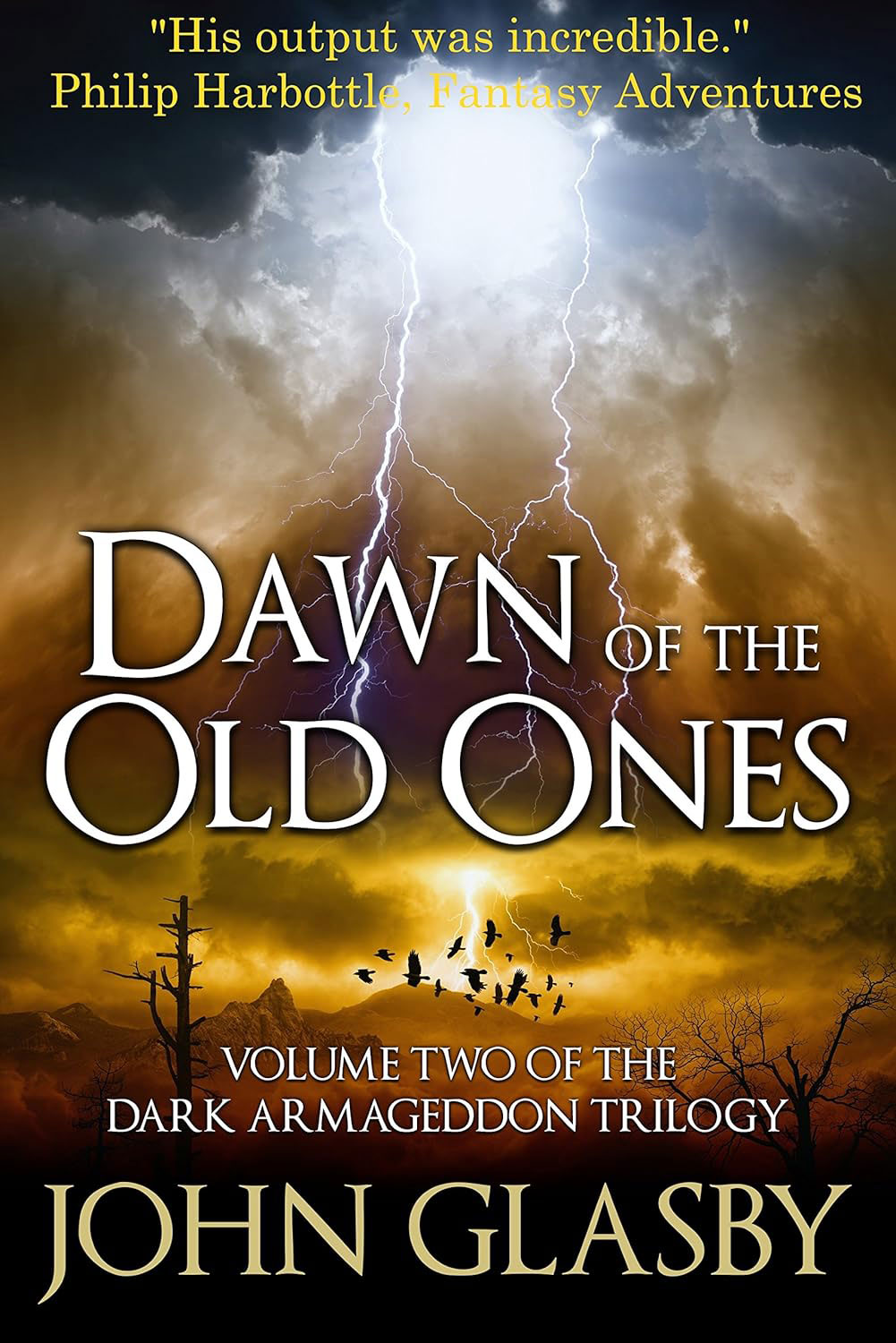 With Dawn of the Old Ones, Vincent is now the narrator. His uncle and his associates in the Organization have been missing and are presumed dead. Vincent now has the vrach. One of the professors at his university is also a member of the Organization and so arranges for Vincent to come with him on an expedition to Ponape, where, with others from the Organization, they hope to prevent Cthulhu from rising with R’lyeh.
They learn of disturbing things going on in the area and make their attempt. Vincent later finds himself in a hospital, and no sign of the others. He is soon joined by McKinrick, who has been able to come back from Yuggoth, but not the rest. Vincent is able to use the vrach to bring the others back, and they all head back to Tormount.
As they figure out what to do next, they learn of the slow breakdown of society as the Old Ones are returning. McKinrick figures out what the endgame of the Old Ones is, which is what led to them being sealed by the Elder Gods. Vincent then makes a dangerous trip to Cambridge to retrieve both Ewart Kinson and the strange rod found at Yrrhh.
There are matters happening around the world due to the return of the Old Ones, including upheavals in the Himalayas. They are alerted by a member of the Organization there, Vansing Lai, about a strange tablet with markings on it. Edmund uses the vrach to take himself and Vincent there to examine it, in case it is something left by the Elder Gods that they can use.
Once there, they must deal with things that try to prevent their success, but they are able to return to England, including Vansing Lai.
Working on it, they figure out it is a means for summoning S’ngac, which will give them the knowledge to contact Nodens, one of the Elder Gods. They do so, and McKinrick, Vincent, and Vansing then travel to Nodens, which is not without its risks. By doing so, they learn that the Elder Gods will not step in, but will provide them knowledge and will add new powers to the vrach.
Returning, Vincent uses that knowledge to deal with some of the followers of Cthulhu, but along the way is confronted by Hastur and other dangers before returning. But back in Tormount, things are getting more dangerous around the world. The followers of Cthulhu are seeking the rod they found in Yrrhh, and when the house seems about to be overrun, McKinrick has everyone leave, taking them to their only sanctuary: Glyu-Vho, the home of the Elder Gods near Orion.
The finale is given in Dark Armageddon, which is told in the third person. We start by meeting a trio of members of the Organization at their headquarters below Miskatonic University: Philip Mansell (one of the Americans who had worked with McKinrick), Prof. Susan Thaxton, and Georg Kormanov, a Russian telepath. They know that McKinrick and his associates have disappeared. They are trying to get information from some Deep Ones, but it goes sideways. They do get some info, but it’s not good.
 We then shift to McKinrick and others on Glyu-Vho. They are in an archive, but are otherwise left alone. They are soon joined by Xaa-gth, a large, mantis-like alien from a world near the galactic core, threatened by the expansion of Azathoth. Can he help them in their search for a device hinted at that might turn the tide against the Old Ones?
While working on that, the Organization back in Arkham is able to make contact, but things go badly for one of them. Vincent then decides that he will return to Earth using the vrach, which he does, but an Old One tries to prevent him. Vincent is able to return, but finds himself near Innsmouth in 1928. He thus orients himself and is able to get to the Organization headquarters. He then sets out with Susan to wipe out the city of the Deep Ones near Innsmouth, and Innsmouth itself.
Back on Glyu-Vho, Edmund is able to translate some of the records there and reveals there is a device, the pthath, created by the Elder Gods that can be used to wipe out the Old Ones. But it was taken by one of them and hidden in “no time,” making it impossible for the Elder Gods to get it. The Old One who did this was Axaroth the Deceiver, which I believe is an original creation of Glasby.
While this is going on, Vincent uses his vrach to travel to Egypt to stop a madman from using a portal left by the serpent people to allow Yog-Sothoth to come through.
The group on Glyu-Vho is then summoned by the Elder Gods, who give them the task to destroy the lairs of the Old Ones and find and use the pthath to destroy them. To help them, the Elder Gods provide them with additional vrachs and also heal Ewart Kinson. Thus, the group will split up. Vincent on Earth will destroy R’lyeh, while the others each go after the lairs of Cthugha, Shub-Niggurath, and Hastur. Edmund, with Xaa-gth, will go after the pthath.
While they have vrachs, each of their tasks will not be easy. While this is going on, Philip Mansell goes up to check on Arkham and find what the coming of Cthulhu has wrought there.
And, yes, after much effort, all of them are successful, putting an end to Cthulhu, Cthugha, Yog-Sothoth, Axaroth, Azathoth, and Shub-Niggurath.
The final chapter actually should have been an epilogue. We are really reading a document left at Miskatonic University by Edmund. After their success, McKinrick and his associates return to Cambridge, as they know the house in Tormount was burned. They make their way back there.
But after looking things over, McKinrick feels that the matter is not fully concluded. He realizes that there was one Old One that escaped, and that he and Edmund will go after that one. But will they succeed? The trilogy is concluded, but does the fight go on?
I was a bit surprised by the end. Did Glasby write this next episode or leave it open-ended? I have no idea.
Overall, I thought this was a good series, but I kind of preferred what we got in Repairman Jack, as we were more exposed to how things were going, and we were exposed to more characters who were affected by the events. Here, most of the apocalyptic events occurred offscreen for most of the characters. Further, in Repairman Jack, the Otherness was not destroyed, just that Earth was removed from their influence forever. The background of the whole series was that Earth was being used as a battleground between the Ally and the Otherness over who would control our world, with the Ally winning in the end.
Overall, I enjoyed this trilogy. There are elements I have issues with, and as I noted, depending on how you approach the Lovecraft mythos will largely determine how you like this one.
Add Comment