In 1923, Adventure editor Arthur Sullivant Hoffman asked 116 writers how they built a yarn. Here’s how J. Allan Dunn, Harold Lamb, and R.T.M. Scott answered.
Having been a magazine editor for 20 years (Adventure, Romance, Delineator, Smart Set, Transatlantic Tales, Watson’s, Chautauquan), I had become more and more rebellious against present methods of teaching fiction writing, for year by year their fruits poured across my desk by the thousands — stories often technically correct but machine-like, artificial, lacking in real individuality. American fiction as a whole is characterized by this result of the curse of formula and, until that curse is removed, American fiction can never attain the place to which native ability entitles it.
Editor’s note
This article is excerpted from Hoffman’s Fiction Writers on Fiction Writing (1923).
So I wrote a book in protest and in the hope that it might, to some degree, serve those who were willing to turn from formalism to individual expression. if only they could find some small guideposts along the way. In Fundamentals of Fiction Writing, I tried to give them, instead of rules, an understanding of the facts of human nature upon which art and its rules must be based, so that they might see their own way and walk upon their own feet. The simplest and most effective way of proving this was to show them that the writers who had actually succeeded did not blindly follow general rules but chose among them each according to his own needs and bent, and that what was one writer’s meat was another writer’s poison.
So, to prove that rules must be subject to individuality, I sent out a questionnaire to writers, planning to use the answers as an appendix to Fundamentals. Some questions were added to gather further data on facts of human nature, and still others were suggested by writers (William Ashley Anderson and L. Patrick Greene) with whom I consulted, answers to these last questions being sought as data of interest to writers in general.
[Editor’s note: Of the 116 fictioneers Hoffman polled for Fiction Writers on Fiction Writing, last month we featured three who contributed regularly to his Adventure and to many other pulps: Arthur O. Friel, Captain A.E. Dingle, who also wrote as Sinbad, and Talbot Mundy. This month we feature J. Allan Dunn (1872-1941) and Harold Lamb (1892-1962), both of whom were regular Adventure contributors, and R.T.M. Scott (1882-1966), whose Secret Service Smith series began in Adventure but migrated to Action Stories, Detective Tales, Flynn’s, and others. Scott also wrote the first two lead novels for The Spider before writing duties were handed to Norvell W. Page (under the Grant Stockbridge house name).]I. The genesis of a story
What is the genesis of a story with you — does it grow from an incident, a character, a trait of character, a situation, setting, a title, or what? That is, what do you mean by an idea for a story?
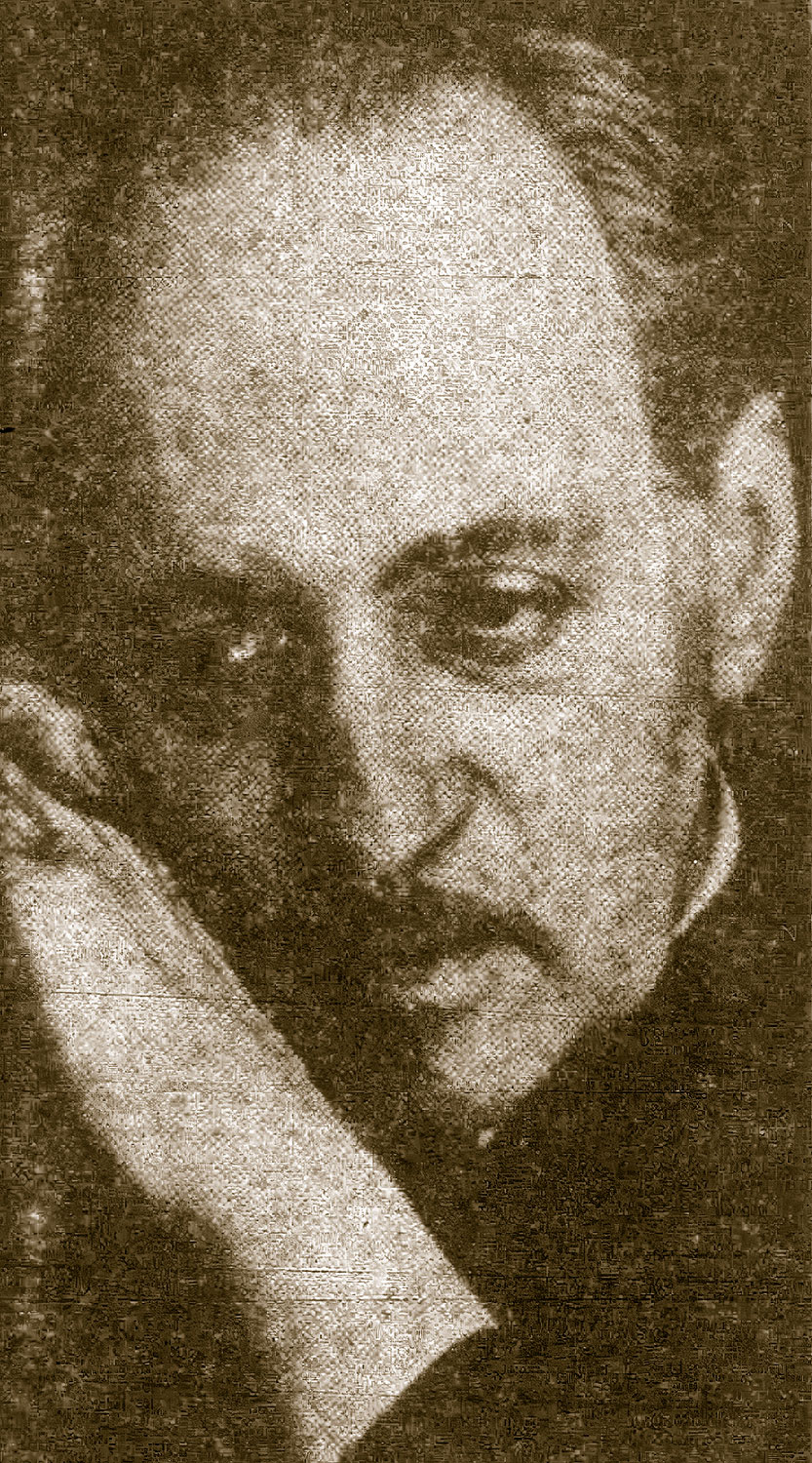
J. Allan Dunn: It varies. I am, of course, deliberately setting aside such stories as are suggested by the needs of editors, expressed by themselves. But I think the genesis of many stories is hard to trace. They are evolved in the brain cortex by that comprehensive and all too liberal phrase “subconsciousness.” I mean by that process that every writer is perforce somewhat of a dramatist, somewhat of an artist, and that his mind, inclined and, later, trained to observe, does this continually until an idea is born. Not necessarily, not probably is this idea complete. Occasionally a short story that works out delightfully is thus conceived and will project itself into the conscious mind upon the proper stimulus — perhaps after a walk or during it, perhaps while hearing music.
Sometimes I read a story that a man has written down as news, the skeleton of a yarn that needs flesh about it, a heart and soul added.
Very often I endeavor to work out some particular trait or character, with its weakness and strength. Sometimes a character I know suggests the story. But I believe the genesis is born very much as is the theme of a musician, the desire of an artist to portray a certain mood or key, the inspiration of a poet.
I believe that the story-teller’s profession is one of the most ancient. I believe it may well have antedated the artist — as animated in the cave-carver or the painter of skins. That it may have prefaced the musician in the drum-beater or the blower of a conch. I think there was always a tale-teller about the fires of the wildest, earliest tribes, one who stimulated their imaginations, touched their pride, bolstered their bravery. There are such today in almost every wild tribe that I have met. And, as the modern musician, the modern artist, have evolved from their primitive forebears, so I think that the spark, the flicker of story-telling, has come down in the cell together with the ear for music, the eye for color and proportion. Add to that your technique — use of action, color, suspense, opposing forces, laughter, tears, tragedy and the results of experience and observation — and your story appears.
I do not mean to say we are all geniuses but that the storyteller, as the poet, is made, that the impulse is engendered with his ego.
Harold Lamb: The genesis of a story is most often some happening that comes into the fancy, followed by the impulse to draw character in connection with that happening.
R.T.M. Scott: To some extent, the genesis of a story comes to me from all the things which you mention. More particularly it comes to me from a character or a title. All my “Secret Service Smith” stories are from character, with the exception of the first of the series. One came from the title out of the “nowhere.” There is one source, however, which you have not mentioned and which has had significant results for me. I refer to dreams. If I can get to my typewriter before the atmosphere of a dream has vanished, the story is sold. A case of this kind occurred with “Such Bluff as Dreams Are Made Of,” the first of the “Smith” series. I crawled out of bed to my typewriter and wrote the thing straightaway without an alteration. It sold at once and, as soon as it appeared in print, Cassell’s Magazine of London wanted it, and I was asked to cable my reply. I dreamed both of the dreams described in this story. Selling dreams is clear profit.
II. Planning, drafting, and revision
Do you map it out in advance, or do you start with, say, a character or situation, and let the story tell itself as you write? Do you write it in pieces to be joined together, or straightaway as a whole? Is the ending clearly in mind when you begin? To what extent do you revise?
Dunn: Here is a hard question: How does the story grow? When it comes into your mind it has various stages of completion. Preferably, I would let my story tell itself. No matter how carefully I may have outlined, gone over and over each next chapter, the thing amplifies when one sits down at the typewriter. The characters change, the situations demand things not thought of, you see a better way, the yeast ferments and rises unevenly. Seldom is my ending clearly in mind. An editor desiring certain breaks for serial publication will cause me to plan more carefully. Sometimes certain parts of a story obtrude themselves but not to such an extent with me as to make me break the straightaway development of the tale in due order. I may reach them with delight, look forward to them, find them in the forefront of my mind whenever I think of the yarn outside of working hours.
And what are working hours? You carry your story as a cow packs its cud. At least, I do. And I go over and over and over it, consciously and subconsciously. I take my next chapter to bed with me and automatically employ every spare minute, on the street even, to revolving the next phase of the plot. Sometimes details will blur, but the main plot extends itself far ahead. I like to try to plan a story with a purpose, but I decidedly prefer to try so to create my characters that they are alive and have certain wills of their own. As a rule I revise once — direct on the typed copy. And most of the errors are in typing. If I polish too much, I am apt to overdo it, I find.
Lamb: Usually the story is thought out fully in advance (and as often changed from beginning to end in the telling). The telling of it is straightaway, with an ending tucked away somewhere in the back of the brain.
As to revision, very, very little, except of wording and often an accident altered after story is finished.
Scott: I usually let the story tell itself. Sometimes I map it out in advance but, if I follow the map, I have a devil of a time to sell the story. I write the story straightaway. The quicker I write, the quicker it sells. When I begin, I seldom have the slightest idea of the ending. I have almost come to the conclusion that it is better to write a new story than to revise — except when I receive an editorial request for certain changes.
III. Imagination and the senses
When you read a story, to what extent does your imagination reproduce the story-world of the author — do you actually see in your imagination all the characters, action, and setting just as if you were looking at an actual scene? Do you actually hear all sounds described, mentioned, and inferred, just as if they were real sounds? Do you taste the flavors in a story, so really that your mouth literally waters to a pleasant one? How real does your imagination make the smells in a story you read? Does your imagination reproduce the sense of touch — of rough or smooth contact, hard or gentle impact or pressure, etc.? Does your imagination make you feel actual physical pain corresponding, though in a slighter degree, to pain presented in a story? Of course you get an intelligent idea from any such mention, but in which of the above cases does your imagination produce the same results on your senses as do the actual stimuli themselves?
If you can really “see things with your eyes shut,” what limitations? Are the pictures you see colored or more in black and white? Are details distinct or blurred?
If you studied geometry, did it give you more trouble than other mathematics?
Is your response limited to the exact degree to which the author describes and makes vivid, or will the mere concept set you to reproducing just as vividly?
Do you have stock pictures for, say, a village church or a cowboy, or does each case produce its individual vision?
Is there any difference in behavior of your imagination when you are reading stories and when writing them?
Have you ever considered these matters as “tools of your trade”? If so, to what extent and how do you use them?
Dunn: All emotions come to us through the senses. And the sense of sight is the key to memory. As smell is akin to taste, so that one may barely distinguish, I think it is hard to say how the memory of what one sees may stimulate the other senses. I can see plainly many of the characters of other authors; they are as distinct as if I had met them. I recognize them partly by the masonry of our craft. So too I can see the setting if I stop to connect up. But I think it is largely the difference between being able to think in a foreign language when we read it, or to pause — however connectedly — and translate. I can force my reading mind to translate more vividly for me if I want it to. Color I can see best. Vaguely I can taste. Sense of rough or smooth contact, no. Nor of pain. But I can get exhilarated by the pleasure of the characters, depressed by their sorrow, react to bravery, patriotism, sacrifice, sorrow. My lachrymal glands will work, my emotions are on the qui vive, but the sense impressions are in the main hazy.
I can see things with my eyes shut without a question. I can conjure up places I have seen or that are well described. I can see color, I can see details, if I stop to think. Don’t believe I can read and do it nearly as vividly, unless experience of my own is coincident.
I had no trouble with solid geometry. I got my mathematical degree at Oxford.
An author will stimulate me far beyond the exact degree of description.
I try to avoid all stock pictures as I would the plague. I conjure up an individual vision. I endeavor to see plainly every character and every bit of scenery I use. Often the characters and scenes are taken entire from life. It is my general plan to write of no phases of life, no places, that I have not known at first hand.
My imagination is highly stimulated when writing stories that I start upon with special enthusiasm, but the work of a fine craftsman urges me to better effort for myself and gives me enormous satisfaction.
I don’t know how far I use such matters as tools of my trade. Certainly the ability to conjure up my scenes and characters is most essential. I am afraid of plagiarism. I acknowledge the reaction to write something in the style or upon the lines of an author I admire, and I have to fight it.
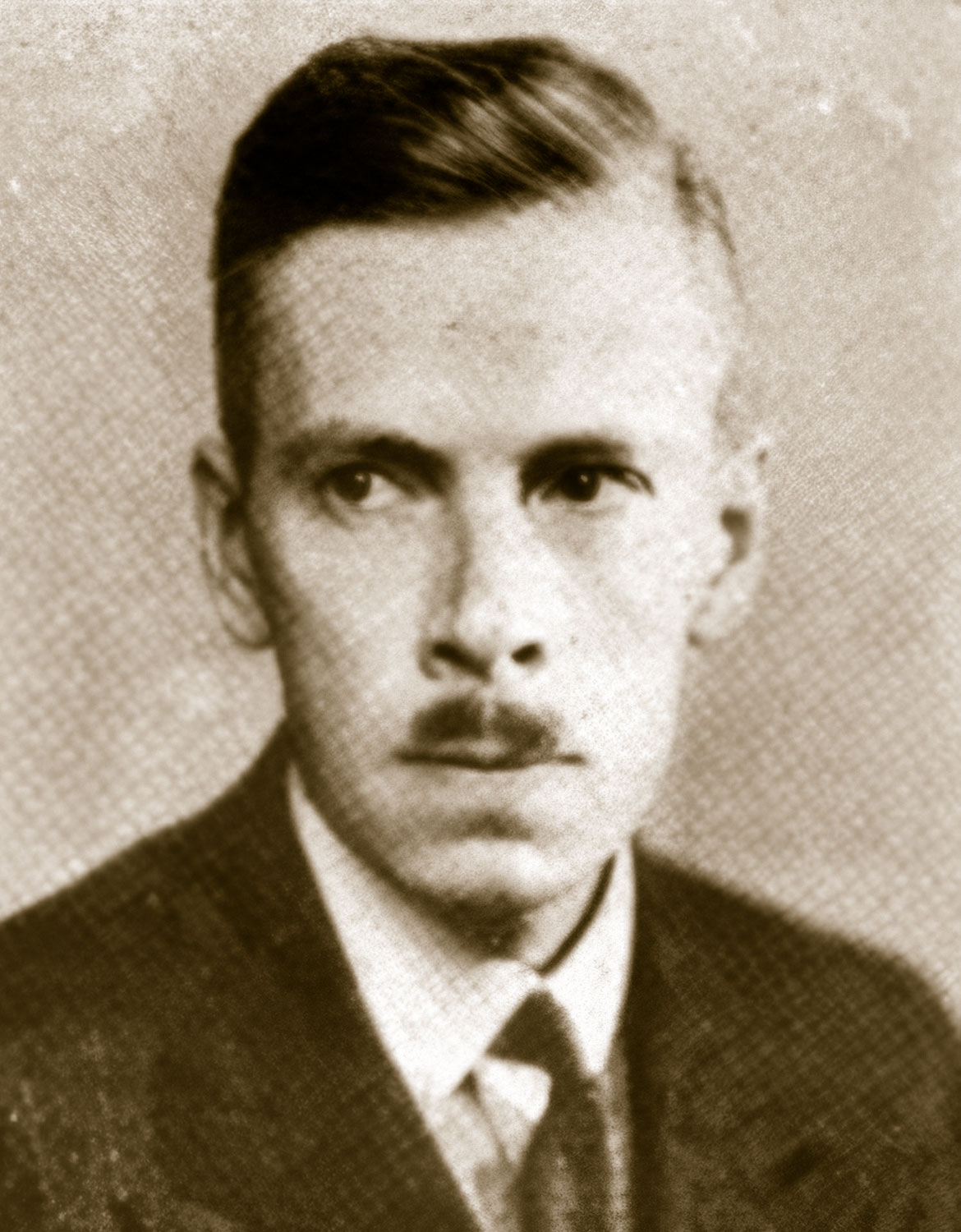
Lamb: Yes, the imagination reproduces the story-world completely. Although not so fully with sounds as with sight, touch, smell. Perhaps the fact that I am nearly half deaf may have something to do with this.
About sensations it is hard to find the right word. Of course, reading of a slashed finger does not give a resultant pain in any finger. It may give, however, a vivid mental image of pain in some finger. This is apt to be more annoying and enduring than a thumb actually cut by a knife.
The strength of the imagery is, logically, in proportion to the skill of the writer in creating his story-world. Reading Knut Hamsun’s Hunger caused a more active mind distress than Les Miserables. Les Miserables was worse (that is, stronger) than Quo Vadis. By this last I do not mean to raise the standard of Scandinavia over Poland. Knut Hamsun’s tale was fashioned to reproduce the imagery of hunger completely, and it was marvelously done. As compared with the actual sensation, it was more painful. I mean retrospectively painful. At certain times I have been rather hungry. But a full meal always banished the distress. No after-impression of pain remained. But, walking the streets of Copenhagen in the person of Knut Hamsun’s young man, I never had any satisfaction from gorging after starving. He — I — always threw up.
So with other sensations. But the most vivid sensations received from the printed word are those that have been experienced in life. Such as pain from frostbite, suffocation under water, drowsiness.
As to limitations of imagination, I do not know of any. Images are distinct. Colored as in the story. When color is lacking, I seem to supply it. Brown, green, gray are always present. (An artist explains that these are the neutral tints.) White, blue and red come into place as described, but less often volunteer. Black, yellow, and purple almost never volunteer, and when the printed word summons, are sketched hastily.
Poor in all mathematics, least deficient in plane and solid geometry.
Seem to reproduce more in imagination than the author sets forth and have always thought that most readers did likewise. I find that continually I am snubbed back by a fresh word as to setting in the course of a story.
No stock pictures.
As to reading vs. writing, the cart before the horse, and behind.
Tools of trade? I have not puzzled about the psychology of a reader.
Scott: When I read a story, my imagination reproduces the story-world of the author very vividly. If it does not, the story does not interest me and I pass on to the next. I do not hear sounds in connection with a story which I am reading except upon rare occasions. Taste, on the other hand, is very acute. Smells, too, are acute although not quite so acute as tastes. The sense of touch is not so pronounced, though I feel it to a certain extent. I feel no actual pain corresponding to the physical pain described in the story. In the case of taste, my imagination produces the same result upon my sense as does the actual stimulus itself. (If the above proves me to be weak-minded or a degenerate, please give me a chance to argue the matter with the fellow who says so.)
Limitations with the “eyes shut” need not exist. Pictures may be colored, in black and white, blurred or distinct. You are the master or a child wandering in fairy land. It rests with you if you will but practice regularly for short intervals of time. Five minutes every day at the same hour will be sufficient for a starter. Seat yourself in a chair with your back to the door and with your eyes closed. Imagine yourself rising from the chair and walking around behind your back toward the door. See the door and feel the knob so vividly that you have forgotten that you are sitting in the chair. Open the door and pass out, closing it behind you. Enter the room again and look at the back of your own head as you sit in the chair. Sounds silly, but try it once a day for six months. If you have made no progress in three weeks, give it up. If you do make progress, however, you will reach marvels at the end of half a year or earlier. There will be no limits, and you will be able to visit any place that you ever heard of or never heard of as you please to be the master or the child. London or Cairo, the center of the earth or the opposite side of the moon await you while something unconscious sits in your chair with its back to the door. Proof? There is no proof for the man of science such as the counting of beans in a closed box. The reason for proof is doubt and, with doubt, the trick vanishes.
Solid geometry gave me more trouble than other mathematics. You can’t prove me a maniac on this, however, for I fooled away my time at the commencement of the study and a weak foundation may have been to blame.
I am not quite sure that I “get” your next question. Perhaps I can not answer definitely. Sometimes I follow the author pretty closely, and sometimes I leave the author in my lap while something sits in the chair with its back to the door.
I have no stock pictures. Each case produces its own vision.
In reading stories, my imagination usually follows. In writing a story it leads or is led. You will say that, if it is led, it follows. Yes, but not in the same way. In reading it follows the plot. In writing it follows something altogether apart from the story, and the result of that following is the story. What is this something which the imagination follows — which leads the imagination? It is, I think, that which makes us think at certain times when our thoughts are not lazily centered upon heat and cold or food and drink — the cravings and sensations of the body. There is something beyond all selfish desires and emotions, and that something should be master of our thoughts if we are to function to the best advantage. If there is nothing on the other side of the grave, then all these ideas are nonsense. If we do continue to “live” after death, however, then that permanent self is not likely to be born at death. It is much more probable that we have it now or even that we may have had it for millions of years — perhaps always. If such should be the case, it might well be that thought or imagination is sometimes influenced by the contact of our work-a-day mind with that real self which never dies and which may be a vast store-house of knowledge and high ideals.
I have considered these matters as “tools of my trade,” and I try, very falteringly, to use them. The best theory upon which to work is, to my mind, the theory of reincarnation. Perhaps, however, that must be proved by each man for himself. I have studied it, and I do believe that it gives results.
IV. The story or the reader?
When you write, do you center your mind on the story itself or do you constantly have your readers in mind? In revising?
Dunn: I do not think I have my readers largely in the forefront of my mind, save as I know they are apt to clamor, through the editor, for the satisfactory ending. Which is one reason why I like to write for [Adventure]. There I am practically untrammeled. I am unconscious of an audience, and I want to be.
Lamb: Think only of story.
Scott: I have my readers always in the back of my mind, but just sufficiently to keep away from things like the war which editors are fed up on. (Perhaps the editors and not the readers are in the back of my mind.) Otherwise I forget the world or all of it which lies beyond the story.
V. Courses and books on writing
Have you had a classroom or correspondence course on writing fiction? Books on it? To what extent did this help in the elementary stages? Beyond the elementary stages?
Dunn: I have had no classroom or correspondence course nor have I read entirely any book on writing fiction. I have received considerable help in the beginning from advice given by an editor. Certain of his suggestions are strong with me today, such as his simile for making a true rope of the story and tucking in all the ends.
I was greatly indebted also in the beginning to an agent of mine — since retired — Helen Gardenhire, who taught me to keep my characters moving when they were on the stage, to take them off when they were not needed and not to let my hero stray up back-stage too often. In other words, continued and precise action.
For myself I conceive my story as a play. I try not to destroy the illusion or halt the action, not to take my audience round back of the scenes and never to let down the curtain and come out in front to make talk. I don’t say I live up to this. I try to. But my first two yarns were accepted, I am sure, with all their faults of technique because they had been done over and over and over — because I had no real technique those days.
It is hard to apply, to set down, this psychology of the art of writing. Jack London used to say, “You’ve got to learn the tricks, old man, then it will go easily.” I try to regard a rejected story as I would any article of merchandise refused by customers — and find out what is the matter with it. I do not believe in correspondence schools for writers. The greatest advance lies in keeping at it and trying to find out what’s wrong.
Lamb: One classroom course in short story-writing, after I had had a good deal published — and filled space for the newspapers, bless ’em, and been part editor of a trade journal. I could not hear anything the professor said, but at the time his book was good reading. Beyond the elementary stages it helped a good deal. In clearing up ideas before beginning work, and following the thread when a story was begun. (I think I missed a lot by not studying it more closely, being certain at the time that I knew more than editors or professors.)
Scott: I have never taken a course of any kind in fiction writing. I have breezed through a few books on short stories, but I have never studied them. Most of the stories which I have sold have violated the rules laid down in these books. I am still in the elementary stage, however, and perhaps, some day, I shall be able to stick to the rules and still sell the stories.
VI. What the craft owes to reading
How much of your craft have you learned from reading current authors? The classics?
Dunn: I don’t know. Don’t believe much until I had myself acquired a certain amount of technique and could recognize the cleverness of others.
Lamb: Current authors, no. I read them very little as a boy, and hardly at all as an author. The classics, yes, if you let me name my own classics.
They were my friends. They still are my friends. I refer to the coterie gathered together in the libraries of my grandfather and uncle. Messrs. Gustave Doré, Æsop, the Nibelungs, Roland and Oliver — The Song [of Roland], you know — Pierrot, Prince of Tatary, The Apostles, Dante in Purgatory, Plato, Rider Haggard, Napoleon, Don Quixote de la Mancha (but Sancho Panza was a better chum). A host of others. But these had the finest pictures — an artist’s library, and a poet’s. So they were my earliest friends. I had others. Especially Francois Villon, Catullus, Henry, Babur, Li Po, Macdonald, Robert Burns.
Scott: So far as current authors are concerned — and even the classics — I find that, when I try to derive benefit from them, I imitate and fall down. In other words, I fail to be myself, and a man can be nobody as well as he can be himself. Of course, a man may derive knowledge and inspiration from all good authors, but he takes those qualities and builds them into himself so that they are part of himself. In this way all good reading is beneficial, and I have benefitted. One thing might be pointed out. The classics stick in my memory much more than does the work of modern authors.
VII. The value of technique
What is your general feeling on the value of technique?
Dunn: The value of technique in story writing is, I think, in exactly the same ratio as technique is to the painter, the singer, the musician, the sculptor, the architect. It is more elusive in writing, but it must be acquired. The world is full of chaps who mistook an ear for music, an eye for color, a faculty for mimicry and a desire to write as a token of genius that would flow like buttermilk out of a jug. Technique constitutes the difference between the amateur and the professional in every profession.
Lamb: Technique? It must be all-important, but if you think about it too much, you are apt to make a mess of things.
Scott: I just looked up “technique” in four dictionaries: Worcester’s (1887), Collins’ (not dated), Murray’s (1908) and Hill’s Vest Pocket French-English (1898). The word wasn’t there. What does it mean?
VIII. What matters most in a story
What is most interesting and important to you in your writing — plot, structure, style, material, setting, character, color, etc.?
Dunn: I should be inclined to state that character drawing was the most important thing to me in my writing. It is very likely my weakest point, but it is to me the most essential thing, the delineation of character and its working under certain circumstances. I try for style. Try hard to recognize of what my style may consist. I like to write a story through one pair of eyes, if possible, and that calls for an ingenuity that is interesting. Plot comes next to character, then style, then color and setting. I enjoy recalling local conditions, I revive the thrill of certain atmospheres, I get a thrill from trying not to let them run away with me and to use atmosphere and color only where they tie up with action. And I continually realize that I do not follow my own few rules.
Lamb: This is a knotty kind of question. Are not character and setting part of material, and color of setting? Chasing one’s imagination, as it were, around a vicious circle? Just now, at least in tales based on history or folklore, I give most thought to material, least to structure.
Scott: Plot, structure, style, etc., are all equally interesting to me and equally difficult. Perhaps clearness, suspense, and the surprise ending interest me the most. If there is anything else — all the better!
IX. Advice to beginners and old hands
What are two or three of the most valuable suggestions you could give to a beginner? To a practiced writer?
Dunn: I have suggested with good results to several beginners that they should try to write in dramatic form entirely before they start a story. That they should write about what they know at first hand. That they should leave the psychological alone. I think I can assimilate advice myself, but I don’t know for sure, and I don’t want to attempt to advise a practiced writer. I don’t want to give an opinion on what is wrong with his yarn. I was an editor once.
Lamb: To a very beginner, to make friends with someone who knows a great deal more about writing than he does.
(This is the only school open to the beginner. There is no academy for the would-be writer, no night course or laboratory. They say the world is the university of the storyteller. But, after all, is not that only another way of saying he must learn to crawl by himself, unless someone wiser than he will instruct him?)
And then to make friends with those who have told stories in other languages. To read them in their own speech. The most valuable to me are French, Chinese, Scandinavian, Russian, Persian. (No, I do not read Russian or Scandinavian. Translations do, for these.)
And to write poetry. It is a good idea to burn it all up afterward. That is a very valuable suggestion. Not just emotional poetry, or that slip-shod thing, free verse. But I think the beginner will learn that most of the masters of his craft know both the music and the mechanism of language. All the early masters did. Today, I wonder if the tools of the masters of the craft cut as deep as then? Well, non sequitur.
To the experienced writer, to follow every whim. And to do a lot of work. He should know how to go about that.
And a most valuable suggestion, if someone else will make it, too, would be keep away from dictionaries, encyclopedias, fiction magazines, literary clubs.
Scott: My best advice to a beginner is to write one hundred stories. I would not advise a practiced writer. He would not be a practiced writer if he accepted any advice that did not come from within himself.
X. The elemental hold of fiction
What is the elemental hold of fiction on the human mind?
Dunn: In an attempt to be brief, I think it is a conjuration of what he or she would like to have been if their lots had been cast differently. I think it sometimes stimulates to adventures, to a struggle against the commonplace. That it can undoubtedly mold opinion and create a recognition of the virtues. That it can show — if the fiction is painted with the colors from the palette of Life itself, excellent example. That it is the poor man’s purse and the stay-at-home’s vicarious romance. It is Aladdin’s Lamp — the Magic Carpet.
Lamb: To be honest, I don’t know. A child likes a story because it opens a door that the child can not open of itself. It pleases a child to have imaginary experiences, giving pleasure, the stimulus of danger, and the satisfaction of curiosity.
A grown-up is pretty much the same. Except that a child desires especially to have curiosity satisfied, and a grown-up likes to forget things.
XI. First person or third
Do you prefer writing in the first person or the third? Why?
Dunn: I enjoy writing in the first person but do not believe it attracts the majority. It smacks of conceit, for one thing, but if one writes of a character in which one can project one’s own thoughts, character, successes, failures, hopes and despair, the intimacy is a stimulus. It has limitations because the hero, if he sees everything, condenses the narrative. And he is only a translator for the other characters. So I prefer the third for sheer craftsmanship. To write a first-person narrative through the eyes of a third person, who may be a minor character but a shrewd observer, is one of my preferences.
Lamb: The first person is a little more fun. Because it gives a freer hand in description and more play to emotion.
Scott: I prefer the third person because editors prefer the third person and I have grown accustomed to the way of least resistance so far as editors are concerned. Besides, that “I” is hard to use genuinely in reference to all kinds of characters.
XII. Losing ideas in the recording
Do you lose ideas because your imagination travels faster than your means of recording? Which affords least check — pencil, typewriter or stenographer?
Dunn: I find that my own typing keeps up fairly well with my imagination, a little behind, far enough to look over the situation ahead and amend or alter it. But then I have usually thought out my day’s typing beforehand, probably several times over. The machine is less check than any other medium, but it was not until I had acquired a certain speed. If my technique bothers me, I can sometimes dictate very rapidly. I find, however, that the matter of proper punctuation, dialect and unusual spelling suffers at the hand of another — this includes a dictaphone. I had a hard fight getting away from pencil to the typewriter, but I don’t want to go back.
Lamb: No, when the imagination travels over a bit of ground it is always able to return. As for ideas, a penciled note, a word or so, will bring them back. A typewriter gives least check, probably due to habit.
Tamen shud!
Scott: I lose a few ideas because my imagination travels faster than my means of recording, but I usually pick up others, equally good, which I would have missed had my recording kept pace with my thoughts. The typewriter affords me the least check, but I believe that to be a matter of habit. One thing about a typewriter is that you get a better look at your stuff as it goes down.
About the author
Arthur Sullivant Hoffman (1876–1966) was an American magazine editor best known for editing the pulp magazine Adventure from 1912 to 1927. Before taking over Adventure, he worked on several magazines and wrote short stories. He also wrote several books on fiction writing, including Fundamentals of Fiction Writing (1922), Fiction Writers on Writing Fiction (1923), and The Writing of Fiction (1934).