As in radio, The Shadow’s film career began with him as an announcer of detective stories, not as a lead character.
In 1931 — the same year that the namesake pulp began — The Shadow started introducing a series of two-reel mysteries for Universal Studios.
Frank Readick, one of the voices of The Shadow on radio’s Detective Story Hour, is credited with narrating A Burglar to the Rescue, the first of the six 15- to 23-minute films. The other film shorts included: Trapped, Sealed Lips, House of Mystery, The Red Shadow and The Circus Show-Up.
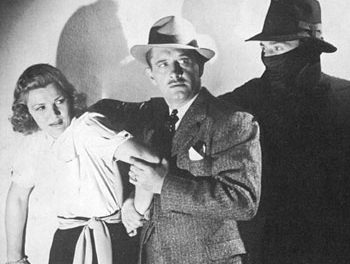
In 1937, The Shadow returned to the screen. This time silent-screen actor Rod La Rocque appeared in The Shadow Strikes for Grand National Pictures. The film featured detective Lamont “Granston,” who like Lamont Cranston in the radio program was The Shadow. In 1938, La Rocque returned, this time as Cranston, in International Crime. The Shadow isn’t the main character, but rather the radio sleuth Cranston is.
In 1940, The Shadow is back in the lead role in a 15-chapter Columbia serial. The Shadow starred hawk-nosed actor Victor Jory.
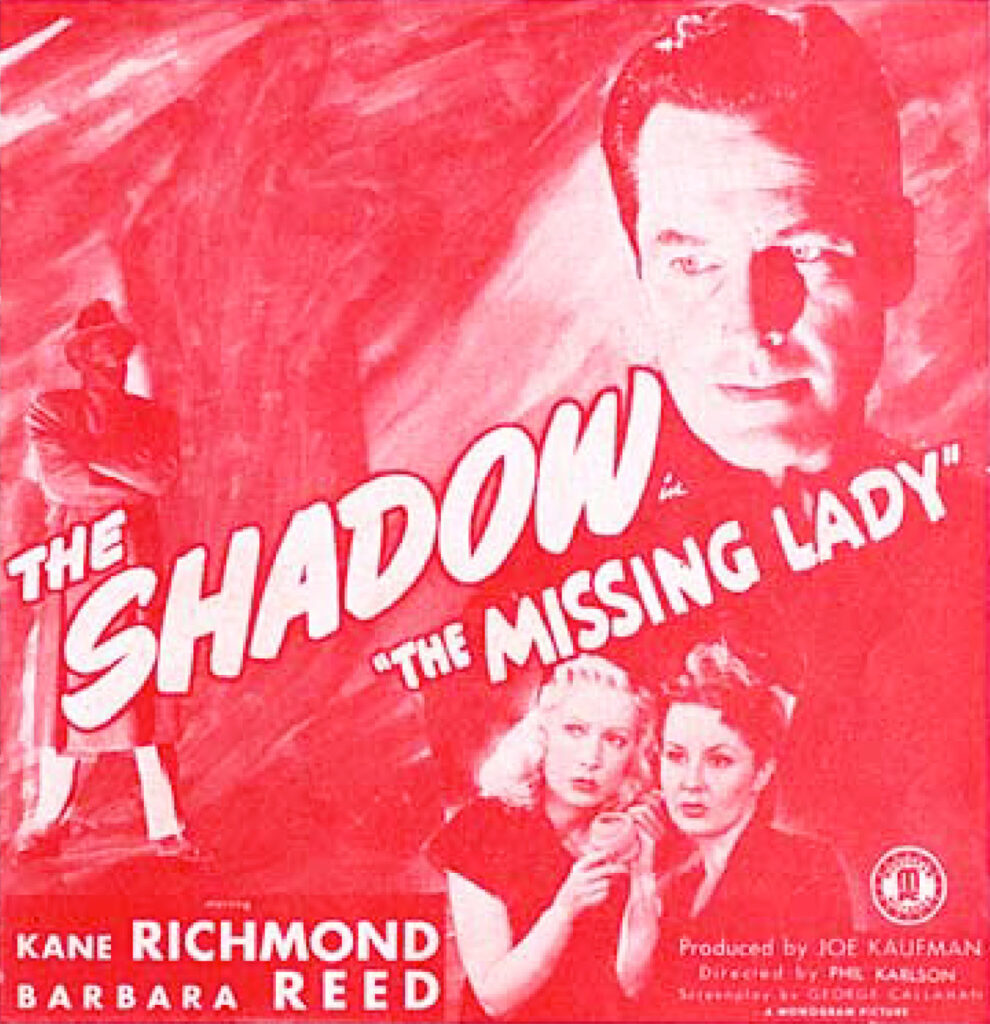
Kane Richmond wore the slouch hat for three pictures for Monogram in 1946: The Shadow Returns, Behind the Mask and The Missing Lady.
Anthony Tollin, former publisher of The Shadow reprints at Sanctum Books and an expert on The Shadow, posted on Facebook, “Orson Welles did attempt to do a Shadow movie in the late 1940s, about half a decade after Citizen Kane, but was unable to license the rights.” Welles commissioned Charles Lederer to script it, Tollin said.
Eight years after the Monogram pictures, Tom Helmore starred as Lamont Cranston in a half-hour TV pilot for The Shadow, with Paula Raymond as Margot Lane and Frank M. Thomas as Commissioner Weston. Then, in 1958, Richard Derr became Cranston in The Invisible Avenger, which has been described as two episodes of a proposed TV series edited into a feature film.
Each of these films, even if they used one of the pulp stories as a basis, veers from The Shadow familiar to readers of the pulp stories. Though the Columbia serial may have come the closest of the early films, it still lacked the essence of the pulp and proved nothing more than a routine action serial.
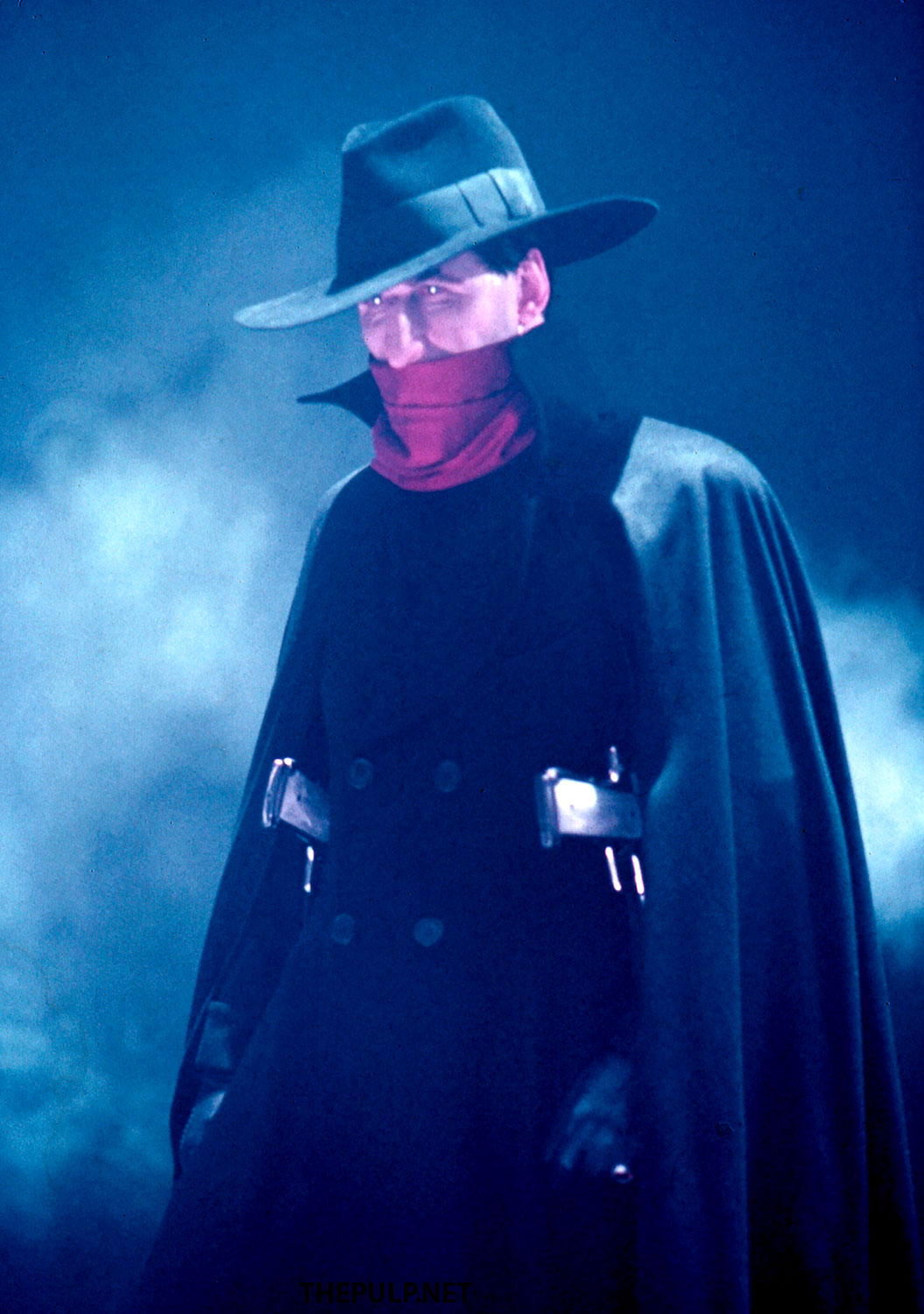
Alec Baldwin is the latest to assume the role in The Shadow. The 1994 film enjoyed the trappings of a robust budget. The art direction and production were splendid, but the script was lacking. Disappointingly for pulp purists, its story, like the previous motion pictures, was an amalgam of influences from The Shadow’s past in print, radio and film. On top of that, screenwriter David Koepp or director Russell Mulcahy added several curious twists to the story, such as Margo Lane being psychic, and Lamont Cranston being police commissioner Wainwright Barth’s nephew.
In late 2006, Variety and other sources reported that Columbia and director/producer Sam Raimi had acquired the rights to Street & Smith’s pulp characters, including The Shadow. But by 2010, the studio let their rights lapse, and Raimi was shopping the film around to others.
In July 2020, James Patterson and Condé Nast announced a new series of Shadow novels, with plans to explore screen adaptations through Condé Nast Entertainment. Patterson and Brian Sitts’ The Shadow appeared in 2021, followed by Circle of Death in 2023. Patterson and Richard DiLallo continued the book series with The President’s Shadow in 2025. So far, no film or television adaptation, cast, director, or production date has been announced.
Sources: IMDB.com; The Shadow Scrapbook by Walter B. Gibson and Anthony Tollin; Cliffhanger: A Pictorial History of the Motion Picture Serial by Alan G. Barbour; other Web sources.